There is no “one-size-fits-all” approach to overcoming post-traumatic stress disorder (PTSD). Each of us struggles in our own manner. With that, we must each learn to overcome it on our own.
Still, some coping strategies appear universal for PTSD. Throughout this article, we’ll observe five of these techniques to help you get control of your condition.
What is PTSD?
Post-traumatic stress disorder (PTSD) is a mental health condition that affects people who have witnessed a traumatic event. Though this condition is often linked to military veterans who’ve seen combat, you can also develop it through other disturbing events, including childhood trauma. ¹
People who experience PTSD have anxiety-related symptoms that either appear at random or from a specific trigger. These include:
- Angry outbursts
- Avoidance
- Emotional numbness
- Flashbacks of the trauma
- Intrusive memories
- Loss of interest
- Nightmares
- Sleep disturbances
There’s no timeline for PTSD. Some people can overcome their symptoms with the right treatment while others struggle with them their whole lives.
Regardless of your situation, there are always temptations to try negative coping mechanisms. These involve ways to numb the pain, such as resorting to drugs or alcohol. Though these coping mechanisms seem profitable in the short term, they are dangerous in the long term. ²
How to Overcome PTSD Through Healthy Coping Strategies
The purpose of the list below is to offer long-term solutions for PTSD. Though you may not find a huge difference when these are initially applied, we guarantee you will notices changes over time.
1.) Meditation
Meditation and other mindfulness practices continuously show positive effects when it comes to treating a variety of mental disorders. Studies find that PTSD patients often reduce avoidance behaviors and self-blame when practicing certain therapies. ³ These therapies include:
- Mindfulness-Based Cognitive Therapy (MBCT) – Similar to other types of psychotherapy, this practice targets specific moods and negative thoughts. When identified, a therapist will help you rework these problems.
- Mindfulness-Based Stress Reduction (MBSR) – An 8-week program that practices various types of meditation to train your focus and rid your mind of intrusive thoughts. ⁴
- Mindfulness-Based Exposure Therapy – A 16-week non-trauma-focused program that uses elements of MBCT while incorporating aspects of exposure therapy. In other words, you’ll be exposed to your fears to identify them and learn to overcome them.
- Meditation-Relaxation – This is your standard meditation where you’ll explore the unconscious and learn self-compassion.
Meditation practices can seem overwhelming at first. When you initially step up to the plate, it’s likely you’re not going to know exactly how meditation works. People truly get the most out of this practice after long periods of application.

2.) Physical Activity
According to professional and personal accounts, physical activity can greatly help reduce PTSD symptoms. This may have to do with the fact that endorphins released upon physical activity help to ease anxiety. However, it may also aid you in conquering your traumas head-on. ⁵
As PTSD patient Rebecca Thorne told The Guardian, “I embrace running in all weathers […] always with a considerable amount of ascent. As I fight my way up the climbs, I often imagine that the hill is my illness and I am going to slowly and steadily conquer it. Yet it never feels like suffering and, once at the top of the hill, I can reach out and touch the sky.”
According to research done by Anglia Ruskin University in Cambridge, surfing was found to have a lot of positive effects on war veterans diagnosed with PTSD. ⁶ The team found that sports allow people to focus their minds in a state they term as “flow.” During “flow,” patients were so captivated by the activity at hand, their negative thoughts (PTSD symptoms) were pushed to the side.
One of the medical professionals involved in the study, Dr. Nick Caddick, found that the effects of physical activity were similar to that of mindful meditation. The only difference is you’re are much more active in the therapy – therefore, releasing other positive chemicals in your body.
Can you think of a physical activity you enjoyed before your traumatic event? Have you considered getting involved with it again? You may just find it was the medicine you have been waiting for.
3.) Get Creative
Have you ever taken your hand at a creative passion? If so, have you considered getting back into it as a means of therapy?
Even if you’ve never found you own creativity, there are several ways to get involved. The most common is art therapy.
Creative efforts have proven to provide people with PTSD relief. This is due to the fact that such efforts allow individuals to externalize their emotions. To place them in front of themselves and learn to cope with these discomforting memories.
One study found that art therapy allowed people with PTSD to overcome various symptoms. Much of the time, these individuals used their creative efforts to leave behind their distressing experiences. ⁶
For art therapy, you must present the traumatic event in a creative manner. Whether it be through a story, a painting, or a sculpture, it can help to see a physical representation of what’s been locked inside of you. Melissa Walker, an art therapist, explains why art therapy can be so powerful:
“Someone who has experienced trauma has a block that keeps them from verbalizing what they’ve been through. There is a shutdown in the [convolution of] Broca – part of the brain responsible for speech and language.”
Though you can always practice your creative efforts in your own time, we suggest trying to get involved in a creative community event. Or to attain classes where creative efforts are showcased.
4.) Aromatherapy
Aromatherapy is probably the most unique coping strategy on this list as it incorporates all-natural healing with relaxation therapies. By inhaling certain scents, aromatherapy may be helpful in reducing anxiety-related symptoms of PTSD. ⁷
Unfortunately, there is no hard science to back these claims up. As of this time, one study covered by Medical News Today found that orange essential oil may be able to reduce symptoms of chronic stress and anxiety associated in victims of PTSD. However, this study has only been tested on mice.
Still, there are personal accounts claiming aromatherapies benefits. Take David Kinchin as an example. After being diagnosed with PTSD in the 1990s, he decided to write a book about his experiences. There he writes: ⁸
“Aromatherapy can form part of a healing regime as well as being a preventive therapy in its own right. It gives pleasure through the sense of touch (massage), the sense of smell (aromatic oils), the sense of sight (pleasant surroundings) […] By so doing, it helps to create favorable conditions in body and mind for healing to take place quite naturally.”
We aren’t claiming that aromatherapy is the answer for you. But we do believe that if you give it a shot, you may just find something beneficial within it.

5.) A Supportive Pet
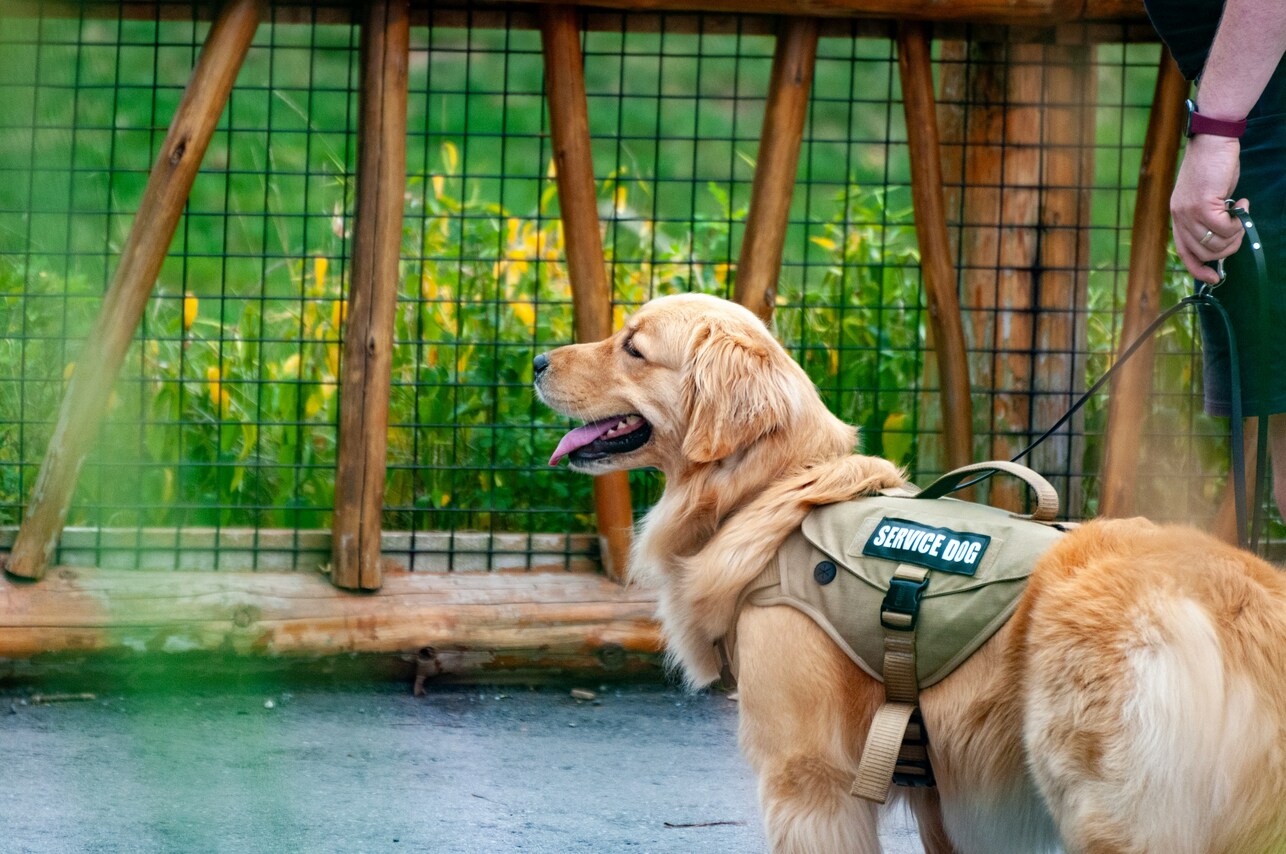
One of the best ways to cope with PTSD is to have spiritual support that’s always with you. For this, many people turn to adopting a pet. Particularly, one who is trained to recognize and prevent the onset of PTSD symptoms. ⁹
Studies have found that support pets can have several benefits for people with PTSD. ¹⁰ Though, it should be mentioned, many of these benefits are short term. Therefore, to truly overcome PTSD symptoms, it’s best to incoporate this strategy with another.
Still, a 2016 study found that after just one week of have a specially trained dog, up to 82% of participants reported reduced PTSD symptoms. ¹¹
Richard Steinberg, a veteran who struggles with PTSD, may have said it best when speaking about his dog: “[She] can sense when [I’m] having a nightmare, night sweats. Putting my hands on her calms me down, and it calms her down. She senses the chemical changes in my body.”
There are several options for specially trained pets. We highly suggest going to your local adoption center and to see what the best fit for you is.
References
¹ Merians AN, Spiller T, Harpaz-Rotem I, Krystal JH, Pietrzak RH. Post-traumatic Stress Disorder. Med Clin North Am. 2023 Jan;107(1):85-99. doi: 10.1016/j.mcna.2022.04.003. Epub 2022 Oct 28. PMID: 36402502.
² Hou T, Yin Q, Cai W, Song X, Deng W, Zhang J, Deng G. Posttraumatic stress symptoms among health care workers during the COVID-19 epidemic: The roles of negative coping and fatigue. Psychol Health Med. 2022 Feb;27(2):367-378. doi: 10.1080/13548506.2021.1921228. Epub 2021 Apr 27. PMID: 33906519.
³ Boyd JE, Lanius RA, McKinnon MC. Mindfulness-based treatments for posttraumatic stress disorder: a review of the treatment literature and neurobiological evidence. J Psychiatry Neurosci. 2018 Jan;43(1):7-25. doi: 10.1503/jpn.170021. Epub 2017 Oct 2. PMID: 29252162; PMCID: PMC5747539.
⁴ Polusny MA, Erbes CR, Thuras P, Moran A, Lamberty GJ, Collins RC, Rodman JL, Lim KO. Mindfulness-Based Stress Reduction for Posttraumatic Stress Disorder Among Veterans: A Randomized Clinical Trial. JAMA. 2015 Aug 4;314(5):456-65. doi: 10.1001/jama.2015.8361. PMID: 26241597.
⁵ Anderson E, Shivakumar G. Effects of exercise and physical activity on anxiety. Front Psychiatry. 2013 Apr 23;4:27. doi: 10.3389/fpsyt.2013.00027. PMID: 23630504; PMCID: PMC3632802.
⁶ Schouten KA MATh, van Hooren S PhD, Knipscheer JW PhD, Kleber RJ PhD, Hutschemaekers GJM PhD. Trauma-Focused Art Therapy in the Treatment of Posttraumatic Stress Disorder: A Pilot Study. J Trauma Dissociation. 2019 Jan-Feb;20(1):114-130. doi: 10.1080/15299732.2018.1502712. Epub 2018 Aug 15. PMID: 30111254.
⁷ Perry N, Perry E. Aromatherapy in the management of psychiatric disorders: clinical and neuropharmacological perspectives. CNS Drugs. 2006;20(4):257-80. doi: 10.2165/00023210-200620040-00001. PMID: 16599645.
⁸ David Kinchin, 2004, Post Traumatic Stress Disorder: The Invisible Injury, 2005 Edition, Success Unlimited
⁹ Leighton SC, Nieforth LO, O’Haire ME. Assistance dogs for military veterans with PTSD: A systematic review, meta-analysis, and meta-synthesis. PLoS One. 2022 Sep 21;17(9):e0274960. doi: 10.1371/journal.pone.0274960. PMID: 36129950; PMCID: PMC9491613.
¹⁰ O’Haire ME, Guérin NA, Kirkham AC. Animal-Assisted Intervention for trauma: a systematic literature review. Front Psychol. 2015 Aug 7;6:1121. doi: 10.3389/fpsyg.2015.01121. PMID: 26300817; PMCID: PMC4528099.
¹¹ Mims D, Waddell R. Animal Assisted Therapy and Trauma Survivors. J Evid Inf Soc Work. 2016 Sep-Oct;13(5):452-7. doi: 10.1080/23761407.2016.1166841. Epub 2016 May 21. PMID: 27210487.




Leave a Reply