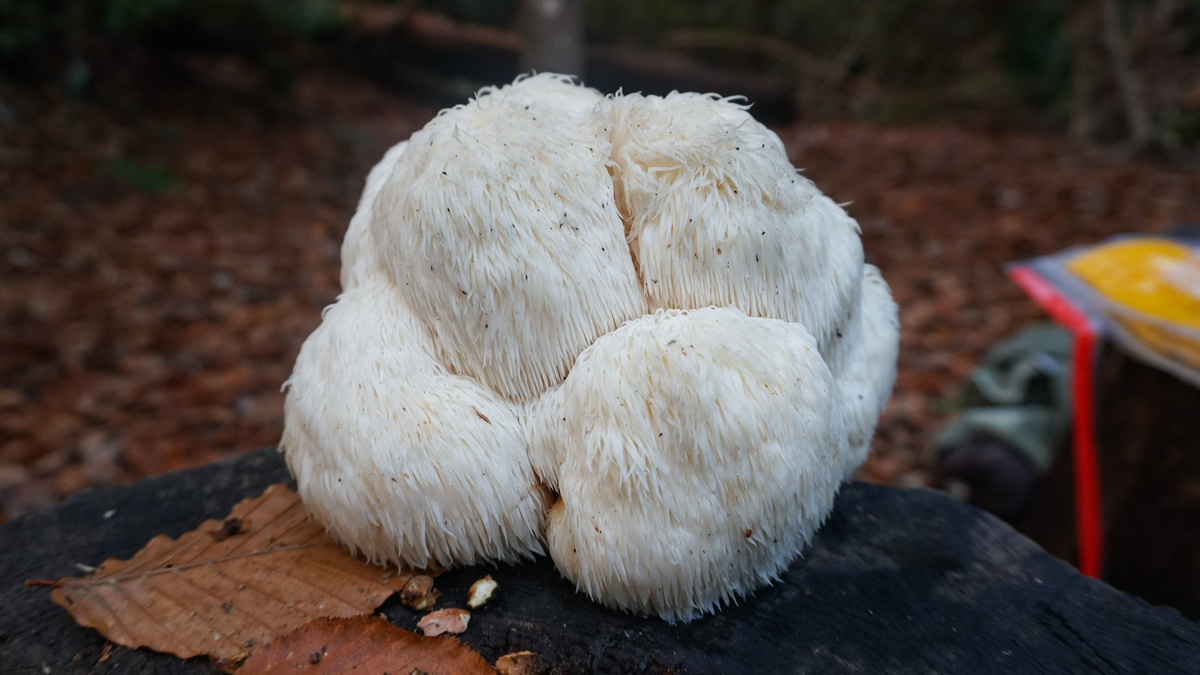
Interest in lion’s mane for ADHD has grown as more people turn to natural supplements for focus and mental clarity. Lion’s mane mushroom (Hericium erinaceus) is already known for its potential to enhance memory, support nerve growth, and reduce inflammation. This makes it one of the most talked-about “smart” mushrooms for brain health.
But how effective is it really? Early research suggests lion’s mane may support cognitive functions often affected by ADHD (such as attention, motivation, and emotional balance) though it’s not a proven treatment. Still, its natural nootropic properties have sparked curiosity among those looking for alternative ways to boost focus and overall mental well-being.
In this article, we’ll break down what science currently says about lion’s mane for ADHD, how it interacts with the brain, and what to consider before trying it yourself.
Key Highlights
- Lion’s mane may support ADHD symptoms by improving focus, memory, and overall cognitive function through its neuroprotective compounds hericenones and erinacines.
- Current research doesn’t directly link lion’s mane to ADHD treatment, but studies show benefits for anxiety, depression, and cognitive decline (conditions often associated with ADHD).
- Lion’s mane is generally safe and easy to use, with recommended doses between 2–5 grams daily, few reported side effects, and potential compatibility alongside traditional ADHD medications like Adderall.
Table of Contents
What is Lion’s Mane?
Lion’s mane (also called hou tou gu or yamabushitake) is a distinctive white, shaggy mushroom that looks much like a lion’s mane. It grows across Asia, Europe, and North America and has been used in traditional medicine in China, Japan, and India for centuries. ¹
People consume lion’s mane in several ways: raw, cooked, dried (for tea), or as concentrated supplements and extracts. Many describe its flavor as similar to seafood (crab or lobster) but milder and meatier. ²
Because lion’s mane contains many bioactive compounds, researchers are investigating whether it could help with conditions involving brain function, inflammation, or nerve health.
How Does Lion’s Mane Work in the Brain and Body?
Lion’s mane contains a number of active molecules. Two stand out: hericenones (found mainly in the mushroom fruiting body) and erinacines (primarily in the mycelium).
Here’s what we know so far:
- These compounds may cross the blood–brain barrier and act in the nervous system. ³
- Hericenones and erinacines have been shown in lab and animal studies to stimulate nerve growth factor (NGF), which supports neuronal growth, survival, and repair. ⁴
- Lion’s mane shows neuroprotective effects: reducing oxidative stress, lowering inflammation, and preventing cell damage in models of brain injury and aging. ⁵
- Through neurotrophic activity, it may help with myelination (the insulation around nerve fibers) and support better connectivity among neurons.
Because of this mix of effects, lion’s mane is being studied in conditions where brain activity declines over time, like Alzheimer’s disease or mild cognitive impairment. ⁶ It’s also historically been used in Eastern herbal medicine for ulcers, inflammation, and immune support.
Is Lion’s Mane a Stimulant?
No, lion’s mane is not a stimulant. It doesn’t act like typical ADHD medications, which boost dopamine, norepinephrine, or stimulate the central nervous system
Instead, in preclinical models, lion’s mane appears to normalize or counterbalance excitatory neurotransmitter activity, rather than drive it upward. ⁷
In other words, its effects tend to be supportive and regulatory, not activating or hyper-stimulating.

Can You Use Lion’s Mane for ADHD?
Many people wonder if lion’s mane for ADHD might help, since lion’s mane has shown promise in easing anxiety and depression symptoms. ⁸ Some users and wellness sites claim it aids focus, attention, or calm in people with ADHD.
However, here’s the reality: there’s very little direct scientific evidence linking lion’s mane to ADHD treatment. What we do have is evidence that it may support some cognitive or mood symptoms related to ADHD.
Because ADHD varies greatly in severity, lion’s mane might offer benefits for those with mild symptoms, while being insufficient for more intense cases. As a supplement with low reported side effects (we’ll cover safety later), many treat it as a complementary option rather than a stand-alone therapy. But don’t expect instant results; benefits may take several weeks of consistent use to emerge.

What Does the Research Say?
Because lion’s mane hasn’t been tested in ADHD populations, we instead look at studies on related symptoms commonly associated with ADHD: cognition, mood, focus, and neuroprotection.
1.) Cognitive Health and Focus
- In a 2023 pilot study with healthy adults (aged 18–45), supplementation with lion’s mane extract (1.8 g/day over 28 days) improved processing speed in a Stroop task and showed a trend toward reduced subjective stress. ⁹
- A few other trials with older adults with mild cognitive impairment also reported improvements in memory and cognitive tests over months of supplementation.
- But not all human trials show clear benefit: one acute dose study of lion’s mane fruiting body (3 g extract) in 18 young participants found no significant improvement in composite cognitive scores. However, a specific motor task (pegboard) showed modest gains. ¹⁰
- In animal models and ADHD-analog rodent studies, lion’s mane extract has improved working memory, learning, and attention. Some protocols even propose lion’s mane may benefit executive function deficits found in ADHD models.
Bottom line: The evidence is suggestive but far from conclusive. Improvements in certain cognitive domains may or may not translate to real-world ADHD symptom relief.
2.) Anxiety, Depression, and Mood Regulation
Because many people with ADHD also struggle with mood or anxiety symptoms, ¹¹ this area of research is relevant:
- A multi-week human trial using lion’s mane (fruiting body + mycelium) found reductions in depressive behaviors and anxiety symptoms after 8 weeks. ⁷
- In a Japanese study, intake of lion’s mane for 4 weeks lowered scores of depression, anxiety, irritability, and concentration issues, compared to baseline. ⁸
- Animal studies support anti-depressant and anxiolytic effects, likely driven by anti-inflammatory and neurotrophic pathways.
Because mood disorders often co-occur with ADHD, improvements in anxiety or depression may indirectly help ADHD symptoms such as restlessness, irritability, or impulsivity.

Lion’s Mane Dosage Recommendation
If you’re interested in trying lion’s mane for ADHD or general cognitive support, the form and dosage you choose can make a big difference. While you can add lion’s mane mushrooms to your meals, extracts are typically more concentrated, and therefore more effective for therapeutic use.
You can find lion’s mane supplements in powders, capsules, or tinctures. Many prefer the powdered form because it mixes easily into coffee, tea, or smoothies, making it simple to take daily.
Recommended Daily Dosage
| Form | Typical Dose | Notes |
| Powder (extract) | 2–5 grams daily (≈2000–5000 mg) | Start low (around 2 g) and increase gradually if needed. |
| Capsules | 500–1000 mg, 2–3 times daily | Check label; potency varies by brand and extraction ratio. |
| Tincture (liquid extract) | 1–2 droppers (≈1–2 mL) daily | Best taken sublingually or added to a drink. |
| Raw or cooked mushroom | Flexible; used for general wellness, not targeted support | Nutritional benefits only; potency much lower than extracts. |
For most people, 2–3 grams daily is a solid starting point. Adjust based on how your body responds and the extract’s strength (some 10:1 extracts deliver much higher concentrations).
Because lion’s mane works cumulatively, consistency is key. Many users report noticing clearer focus and improved mood after 2–4 weeks of regular use.
Lion’s Mane Side Effects and Safety
Research on the potential side effects of lion’s mane remains limited, but most people report little to no issues when taking it regularly. That said, a few users have experienced mild allergic reactions or aggravated asthma symptoms. Because of this, it’s best to consult your healthcare provider before introducing lion’s mane for ADHD or any other cognitive support.
If you’re pregnant, nursing, or have a pre-existing medical condition, it’s recommended to avoid lion’s mane until more definitive research confirms its safety. While the mushroom is natural, that doesn’t always mean it’s right for everyone, especially when used as a supplement rather than a food source.
Can I take Lion’s Mane with Adderall?
If you’re currently prescribed Adderall, you may be wondering whether it’s safe to combine it with lion’s mane. So far, there have been no reports of negative interactions between the two. However, it’s still wise to speak with your doctor or psychiatrist before adding lion’s mane to your ADHD treatment plan.
Some users find that taking lion’s mane alongside Adderall helps promote a smoother focus without the “crash” that often follows stimulant medication. While anecdotal, these experiences hint at the potential for lion’s mane to complement (rather than conflict with) prescription ADHD treatments.
Final Word
ADHD can be challenging to manage, and it’s understandable that many people turn to natural alternatives in search of better focus and mental balance. While research on lion’s mane for ADHD specifically is still lacking, early studies on its cognitive and neurological benefits are promising.
Existing evidence suggests that lion’s mane may support brain health, promote nerve growth, and improve concentration. These factors could be particularly helpful for individuals with attention difficulties.
That said, lion’s mane shouldn’t replace prescribed ADHD medications or professional treatment. If you’re considering adding lion’s mane extract to your wellness routine, always consult your healthcare provider first to ensure it’s safe and appropriate for your situation.
With minimal side effects and a growing base of positive anecdotal reports, lion’s mane may be a natural option worth exploring for cognitive support and overall mental clarity.
Frequently Asked Questions (FAQs)
Can lion’s mane help with ADHD symptoms?
While there’s no direct scientific evidence proving lion’s mane treats ADHD, many users report improvements in focus, memory, and mental clarity. Studies on lion’s mane show it supports brain health and neurogenesis, which may indirectly benefit those with ADHD.
How long does it take for lion’s mane to work for ADHD?
Most people notice subtle changes in focus and mood after consistent use for 2 to 4 weeks. However, results vary depending on dosage, product quality, and individual body chemistry.
What’s the best way to take lion’s mane for ADHD?
Lion’s mane can be consumed as a powder, capsule, or tincture. Many prefer powders for easy mixing into coffee or smoothies. For cognitive benefits, most studies recommend 2–5 grams of lion’s mane extract daily. Always check your product’s label for accurate dosing.
Is lion’s mane safe for children with ADHD?
There’s not enough research to confirm the safety of lion’s mane for children. While it’s a natural supplement, children’s developing brains respond differently to nootropics. Parents should always consult a pediatrician before giving lion’s mane to kids with ADHD.
Does lion’s mane work better than Adderall for ADHD?
Lion’s mane and Adderall work in completely different ways. Adderall is a stimulant medication that increases dopamine and norepinephrine, while lion’s mane supports long-term brain health through nerve growth and neuroprotection. Lion’s mane may complement ADHD treatment, but it’s not a substitute for prescription medication.
References
¹ Friedman M. Chemistry, Nutrition, and Health-Promoting Properties of Hericium erinaceus (Lion’s Mane) Mushroom Fruiting Bodies and Mycelia and Their Bioactive Compounds. J Agric Food Chem. 2015 Aug 19;63(32):7108-23. doi: 10.1021/acs.jafc.5b02914. Epub 2015 Aug 5. PMID: 26244378.
² Jiang S, Wang S, Sun Y, Zhang Q. Medicinal properties of Hericium erinaceus and its potential to formulate novel mushroom-based pharmaceuticals. Appl Microbiol Biotechnol. 2014 Sep;98(18):7661-70. doi: 10.1007/s00253-014-5955-5. Epub 2014 Jul 29. PMID: 25070597.
³ Li IC, Lee LY, Tzeng TT, Chen WP, Chen YP, Shiao YJ, Chen CC. Neurohealth Properties of Hericium erinaceus Mycelia Enriched with Erinacines. Behav Neurol. 2018 May 21;2018:5802634. doi: 10.1155/2018/5802634. PMID: 29951133; PMCID: PMC5987239.
⁴ Phan CW, Lee GS, Hong SL, Wong YT, Brkljača R, Urban S, Abd Malek SN, Sabaratnam V. Hericium erinaceus (Bull.: Fr) Pers. cultivated under tropical conditions: isolation of hericenones and demonstration of NGF-mediated neurite outgrowth in PC12 cells via MEK/ERK and PI3K-Akt signaling pathways. Food Funct. 2014 Dec;5(12):3160-9. doi: 10.1039/c4fo00452c. PMID: 25288148.
⁵ Sabaratnam V, Kah-Hui W, Naidu M, Rosie David P. Neuronal health – can culinary and medicinal mushrooms help? J Tradit Complement Med. 2013 Jan;3(1):62-8. doi: 10.4103/2225-4110.106549. PMID: 24716157; PMCID: PMC3924982.
⁶ Li IC, Chang HH, Lin CH, Chen WP, Lu TH, Lee LY, Chen YW, Chen YP, Chen CC, Lin DP. Prevention of Early Alzheimer’s Disease by Erinacine A-Enriched Hericium erinaceus Mycelia Pilot Double-Blind Placebo-Controlled Study. Front Aging Neurosci. 2020 Jun 3;12:155. doi: 10.3389/fnagi.2020.00155. PMID: 32581767; PMCID: PMC7283924.
⁷ Chong PS, Fung ML, Wong KH, Lim LW. Therapeutic Potential of Hericium erinaceus for Depressive Disorder. Int J Mol Sci. 2019 Dec 25;21(1):163. doi: 10.3390/ijms21010163. PMID: 31881712; PMCID: PMC6982118.
⁸ Nagano M, Shimizu K, Kondo R, Hayashi C, Sato D, Kitagawa K, Ohnuki K. Reduction of depression and anxiety by 4 weeks Hericium erinaceus intake. Biomed Res. 2010 Aug;31(4):231-7. doi: 10.2220/biomedres.31.231. PMID: 20834180.
⁹ Docherty S, Doughty FL, Smith EF. The Acute and Chronic Effects of Lion’s Mane Mushroom Supplementation on Cognitive Function, Stress and Mood in Young Adults: A Double-Blind, Parallel Groups, Pilot Study. Nutrients. 2023 Nov 20;15(22):4842. doi: 10.3390/nu15224842. PMID: 38004235; PMCID: PMC10675414.
¹⁰ Surendran G, Saye J, Binti Mohd Jalil S, Spreadborough J, Duong K, Shatwan IM, Lilley D, Heinrich M, Dodd GF, Surendran S. Acute effects of a standardised extract of Hericium erinaceus (Lion’s Mane mushroom) on cognition and mood in healthy younger adults: a double-blind randomised placebo-controlled study. Front Nutr. 2025 Apr 10;12:1405796. doi: 10.3389/fnut.2025.1405796. PMID: 40276537; PMCID: PMC12018234.
¹¹ Chamberlain SR, Ioannidis K, Leppink EW, Niaz F, Redden SA, Grant JE. ADHD symptoms in non-treatment seeking young adults: relationship with other forms of impulsivity. CNS Spectr. 2017 Feb;22(1):22-30. doi: 10.1017/S1092852915000875. Epub 2016 Sep 29. PMID: 27680974; PMCID: PMC5330410.





Leave a Reply