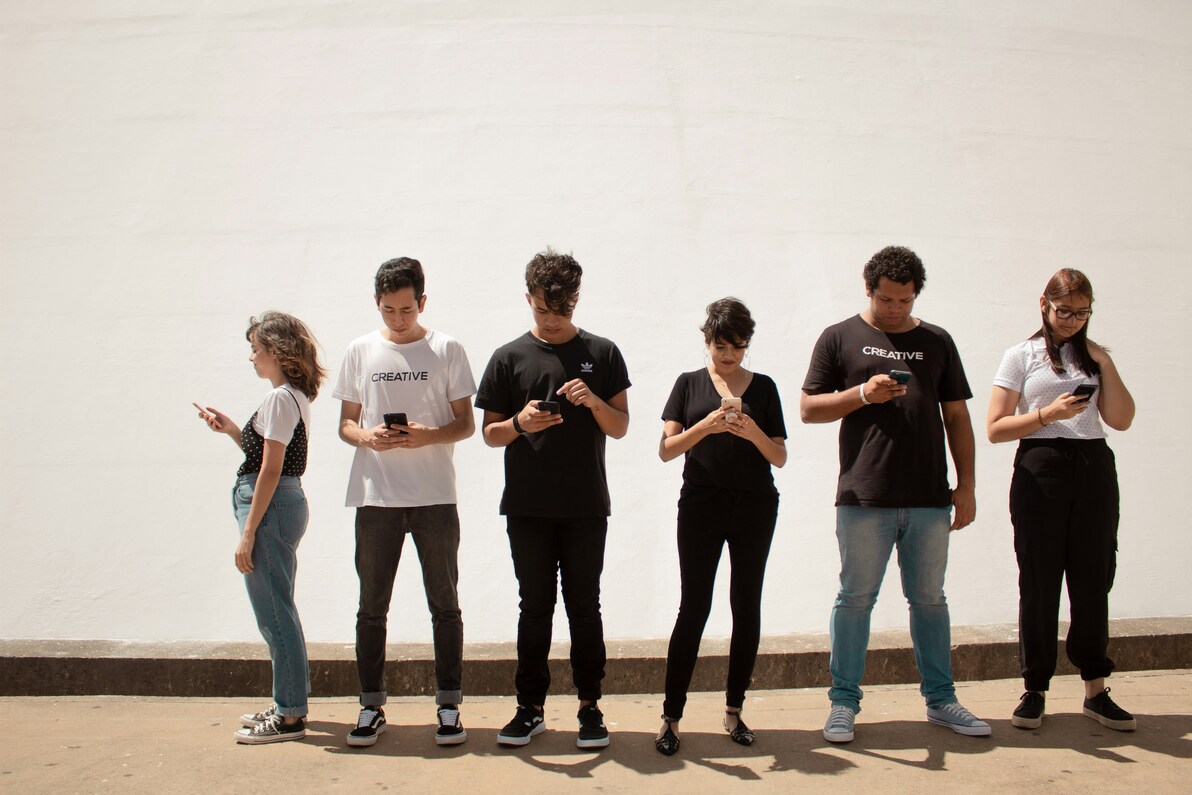
The link between social media and social anxiety is clear, with researchers reporting that overuse leads to increased signs and symptoms of the condition.
However, this link also isn’t direct. In other words, just because you use social media doesn’t mean you’ll develop a social anxiety disorder. Instead, it’s determined by how and how much an individual uses social media.
Throughout this article, we’re going to take a deeper dive into these effects and what you can do to overcome social anxiety.
Key Highlights
- Social media doesn’t guarantee social anxiety, but it can fuel it. The connection depends less on whether you use these platforms and more on how often and how you engage with them.
- Time, content, and disruption are the three factors that matter most. According to the U.S. Surgeon General, excessive screen time, harmful content exposure, and interference with sleep or activity are the biggest drivers of risk.
- Social anxiety is treatable. Exposure therapy, CBT, and medication remain effective options for managing symptoms and easing daily life.
Table of Contents
What is a Social Anxiety Disorder?
Most people grow nervous in some social situations. For example, a first date or a job interview is bound to come with some anxiety. A social anxiety disorder (SAD) causes more severe issues. Sometimes referred to as social phobia, SAD results in the following reactions to social situations: ¹
- Significant anxiety
- Embarrassment
- Self-consciousness
Most people with SAD fear scrutiny or negative judgment from others. These symptoms can also lead to social avoidance and self-isolation. Naturally, these afflictions can cause other health problems, including depression and suicidal ideation. ² ³
Social anxiety disorder creates intense fears, anxiety, and avoidance that interfere with your personal relationships, daily routines, and professional performance. Some common signs include: ⁴
- Anxiety when anticipating a feared activity, event, or situation.
- Avoidance of doing things or speaking to people due to fear of embarrassment.
- Concern that others will notice your anxiety or discomfort.
- Evading situations where you might be the center of attention.
- Expecting the worst possible outcome from a negative experience during a social situation.
- Fear of physical symptoms that may cause you embarrassment, such as blushing, sweating, trembling, having a shaky voice, or stomach problems.
- Fear of situations where you may be negatively judged.
- Frequently worrying about embarrassing or humiliating yourself around others.
- Intense fear of interacting or talking with strangers.
- Self-analysis of your performance and identification of flaws in your interactions after a social situation.
- Severe fear or anxiety during social situations.
You may also develop physical symptoms, such as blushing, a rapid heart rate, or sweating. ⁵

Does Social Media Cause Social Anxiety?
In 2023, the U.S. Surgeon General’s Advisory released a report claiming there is growing evidence that social media causes harm to young people’s mental health. It wasn’t long after that the American Psychological Association (APA) issued its own health advisory.
In his report, United States Surgeon General Vivek Murthy, MD, MBA, notes there are three main areas of concern when it comes to social media:
- Amount of time one spends on these platforms.
- Content that’s being consumed (or exposed to).
- The “degree to which it [online interactions] disrupts activities essential for health, such as sleep and physical activity.”
If these factors are not properly vetted, you’re more likely to struggle with anxiety and depression. But what exactly is damaging your mental health in your social media use? Consider the following:
- Fear of Missing Out (FOMO) – If you’re constantly up-to-date on social media, you may feel like you’re missing out on life events others participate in. ⁶
- Self-Esteem Fluctuations – Do you think about yourself a lot as you spend more time on social media? You may be caught up in social media comparison (idealizing snapshots of others and determining your self-worth based on this content). ⁷
- Restless When Not Connected – You may get irritable if you haven’t checked social media, a sign of dependency. ⁸
- Changes in Social Behavior – Your inability to interact with others in person can also weigh down on your self-esteem. ⁹

How to Treat a Social Anxiety Disorder?
If you struggle with social anxiety due to social media use, exposure therapy may be your best option for treatment. This will force you to participate in social interactions (in a safe setting) to help you learn to cope with anxiety. ¹⁰
However, there are other ways treatment can help you overcome social anxiety. These include:
- Psychotherapy – Talk therapies, such as cognitive behavioral therapy (CBT), allow you to understand negative thought patterns and what you can do to break them. ¹¹
- Medication – Selective serotonin reuptake inhibitors (SSRIs) have been found to reduce symptoms of anxiety and can be used in social settings. ¹²
Final Word
Social media isn’t the villain here, but it isn’t harmless, either. The way you use it matters more than whether you use it at all. If you notice your anxiety creeping up alongside your screen time, that’s worth paying attention to. And if it’s already affecting your daily life, treatment works. You don’t have to figure this out on your own.
Frequently Asked Questions (FAQs)
Can social media cause social anxiety disorder?
Not directly. Social media itself doesn’t create a diagnosis, but overuse (especially when it disrupts sleep, activity, or in-person connection) is strongly linked to worsening anxiety symptoms.
How much social media use is too much?
There’s no single number that applies to everyone, but the Surgeon General’s Advisory points to time spent, content consumed, and disruption to essential activities like sleep as the key warning signs to watch.
Can you have social anxiety without using social media?
Yes. Social anxiety disorder existed long before social media and can develop from a combination of genetics, environment, and life experience. Social media can amplify symptoms, but it isn’t a requirement for the condition.
References
¹ Rose GM, Tadi P. Social Anxiety Disorder. 2022 Oct 25. In: StatPearls [Internet]. Treasure Island (FL): StatPearls Publishing; 2024 Jan–. PMID: 32310350.
² Teo AR, Lerrigo R, Rogers MA. The role of social isolation in social anxiety disorder: a systematic review and meta-analysis. J Anxiety Disord. 2013 May;27(4):353-64. doi: 10.1016/j.janxdis.2013.03.010. Epub 2013 Apr 16. PMID: 23746493.
³ Motillon-Toudic C, Walter M, Séguin M, Carrier JD, Berrouiguet S, Lemey C. Social isolation and suicide risk: Literature review and perspectives. Eur Psychiatry. 2022 Oct 11;65(1):e65. doi: 10.1192/j.eurpsy.2022.2320. PMID: 36216777; PMCID: PMC9641655.
⁴ Jefferson JW. Social Anxiety Disorder: More Than Just a Little Shyness. Prim Care Companion J Clin Psychiatry. 2001 Feb;3(1):4-9. doi: 10.4088/pcc.v03n0102. PMID: 15014622; PMCID: PMC181152.
⁵ Alhadi AN, Alageel MA, Alsuhaibani FA, Alkaff HM, Albawardi MS, Alfaifi AA, Duraihem TB, Alhayes FA. Prevalence and Severity of Social Anxiety Symptoms and Their Relationship With Body Dysmorphic Symptoms. Cureus. 2024 Feb 2;16(2):e53436. doi: 10.7759/cureus.53436. PMID: 38435158; PMCID: PMC10909235.
⁶ Rozgonjuk D, Sindermann C, Elhai JD, Montag C. Fear of Missing Out (FoMO) and social media’s impact on daily-life and productivity at work: Do WhatsApp, Facebook, Instagram, and Snapchat Use Disorders mediate that association? Addict Behav. 2020 Nov;110:106487. doi: 10.1016/j.addbeh.2020.106487. Epub 2020 May 27. PMID: 32674020.
⁷ Samra A, Warburton WA, Collins AM. Social comparisons: A potential mechanism linking problematic social media use with depression. J Behav Addict. 2022 Jun 2;11(2):607-614. doi: 10.1556/2006.2022.00023. PMID: 35895606; PMCID: PMC9295248.
⁸ Lai F, Wang L, Zhang J, Shan S, Chen J, Tian L. Relationship between Social Media Use and Social Anxiety in College Students: Mediation Effect of Communication Capacity. Int J Environ Res Public Health. 2023 Feb 18;20(4):3657. doi: 10.3390/ijerph20043657. PMID: 36834357; PMCID: PMC9966679.
⁹ Rouxel P, Chandola T. No Substitute for In-Person Interaction: Changing Modes of Social Contact during the Coronavirus Pandemic and Effects on the Mental Health of Adults in the UK. Sociology. 2023 May 15:00380385231172123. doi: 10.1177/00380385231172123. PMCID: PMC10189533.
¹⁰ Scheurich JA, Beidel DC, Vanryckeghem M. Exposure therapy for social anxiety disorder in people who stutter: An exploratory multiple baseline design. J Fluency Disord. 2019 Mar;59:21-32. doi: 10.1016/j.jfludis.2018.12.001. Epub 2018 Dec 13. PMID: 30578977.
¹¹ Butler RM, O’Day EB, Swee MB, Horenstein A, Heimberg RG. Cognitive Behavioral Therapy for Social Anxiety Disorder: Predictors of Treatment Outcome in a Quasi-Naturalistic Setting. Behav Ther. 2021 Mar;52(2):465-477. doi: 10.1016/j.beth.2020.06.002. Epub 2020 Jun 15. PMID: 33622514.
¹² Schneier FR. Treatment of social phobia with antidepressants. J Clin Psychiatry. 2001;62 Suppl 1:43-8; discussion 49. PMID: 11206033.



Leave a Reply