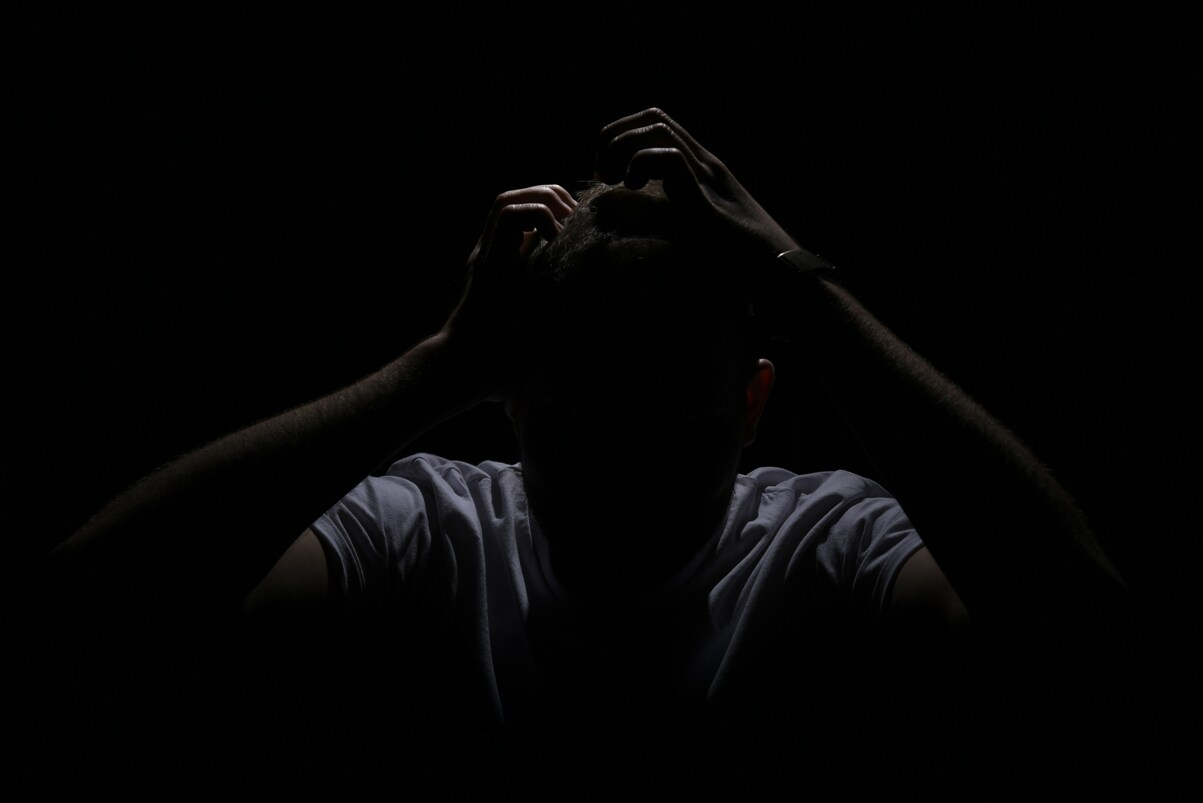
An anxiety disorder is a mental health condition that is defined by intense, excessive, and persistent worry or fear about everyday situations. ¹
Remember, experiencing some anxiety is normal. It’s how our brains naturally warn us of dangerous situations. ² Anxiety only becomes a mental health condition when:
- Fear and dread inhibit your ability to function.
- You frequently overreact when your emotions are triggered.
- You have no control over your responses to triggers.
Throughout this article, we’re going to take a deeper dive into anxiety, how it can affect masculinity, and what natural processes are available for relief.
Key Highlights
- Anxiety is more than just stress. It becomes a disorder when fear and dread interfere with your ability to function, you frequently overreact to emotional triggers, or you lose control over your responses entirely.
- Men are disproportionately affected and underserved. About one in five men experiences anxiety or depression annually, yet cultural pressures around masculinity make them far less likely to seek help.
- Natural management is a viable starting point. Exercise, sleep, diet, and mindfulness are all evidence-backed approaches to reducing anxiety symptoms, and they’re a good fit for men who prefer to tackle problems on their own terms.
Table of Contents
Signs and Symptoms of Anxiety
Symptoms differ based on the type of anxiety disorder (see below). General symptoms of these conditions include:
Physical Symptoms:
- Dry mouth
- Nausea
- Numbness (or tingling in hands or feet)
- Rapid heartbeat
- Sweaty or cold hands
- Tense muscles
Mental Symptoms:
- Flashbacks or repeated thoughts of a traumatic experience
- Nightmares
- Panic, fear, and uneasiness
- Uncontrollable, obsessive thoughts
Behavioral Symptoms:
- Difficulty sleeping
- Ritualistic activities (i.e. washing your hands repeatedly)
- Unable to be calm or still
Types of Anxiety Disorders
Anxiety disorders are divided into subsections to better define the problem at-hand. The most common include: ³
- Generalized anxiety disorder (GAD) – Intense and unrealistic worry and tension, even without any apparent cause. This may involve difficulty concentrating, restlessness, and trouble with sleep.
- Panic disorder – Sudden and intense feelings of anxiety. It may include feelings of chest pain, choking, or sweating. ⁴
- Phobias – A severe fear of a certain object or situation. For example, you may develop a fear of confined spaces (claustrophobia). ⁵
- Social Anxiety Disorder – Overwhelming worry and self-consciousness in typical social situations. ⁶
Other mental health conditions are also considered anxiety disorders, including post-traumatic stress disorder (PTSD) and obsessive-compulsive disorder (OCD).

Masculinity and Anxiety
About one in five men experiences either anxiety or depression annually. However, men are far less likely to seek help compared to women. So, why is this?
Anxiety is often attributed to a feminine condition. It signals a lack of emotional control, which in itself is a detriment to masculine character. For example, a man who lacks emotional control is less likely to be able to handle decision-making in high-stress situations.
More so, men have a tendency to want to solve problems on their own. There is nothing wrong with this attitude; it’s a masculine nature. Therefore, if a man struggles with anxiety, it’s completely natural for him to want to relieve it on his own.
Still, anxiety is complicated. It’s often rooted in deeper emotions that modern masculine culture doesn’t address (think hustling or heavy lifting). These outlets can provide temporary relief, but they aren’t a cure. They’re a band-aid on a deeper wound.
In trying to live up to these standards of masculinity, many men avoid seeking help. And when the culture disappoints them, they may turn to unhealthy activities (i.e., drugs and alcohol) to cope.
So, what can men do about their anxiety disorder? The first step is reaching out for help. The second is finding a pathway that allows you to heal on your terms.
Natural Ways to Manage Anxiety
If you want to start making immediate changes to your life to relieve anxiety, here are a few options to consider:
- Exercise and Time Outdoors – The more you move your body, the more you’ll produce serotonin and endorphins. As such, numerous studies have shown exercise helps reduce anxiety. ⁷ On top of this, spending time outdoors (especially in nature) can help make you feel more grounded. ⁸
- Mindfulness and Meditation – Meditation can help regulate emotions by providing you with a sense of relaxation. ⁹ You’ll want to practice breathing techniques, which can be used later if you experience an anxiety attack.
- Prioritizing Sleep – The better sleep you get, the better your mental health will be. Set a sleep schedule and stick to it. Over time, this will have a positive effect on your stress levels. ¹⁰
- Diet – Our eating habits significantly affect our stress levels. If you have anxiety, it’s recommended that you avoid processed meats, fried food, refined cereals, candy, pastries, and high-fat dairy products. ¹¹
When to Seek Help
While these methods are effective, some may struggle with severe forms of anxiety that natural wellness cannot immediately address. Furthermore, these methods may not be effective in helping you overcome anxiety in daily life. In such cases, you’ll want to reach out to a healthcare provider for professional help.

Final Word
Anxiety disorders are common, manageable, and nothing to be ashamed of. Whether you start with a walk outside, a better sleep schedule, or a conversation with your doctor, the important thing is that you start.
Strength isn’t suffering in silence. It’s knowing when and how to take action.
Frequently Asked Questions (FAQs)
What is the difference between anxiety and an anxiety disorder?
Anxiety is a normal response to stress or danger. It becomes a disorder when fear is excessive, uncontrollable, and begins interfering with daily life.
Can anxiety disorders be managed without medication?
Yes. Exercise, mindfulness, sleep, and dietary changes are all evidence-backed approaches to managing anxiety. However, severe cases may still require professional treatment.
What lifestyle habits make anxiety worse?
Alcohol, drugs, poor sleep, high caffeine intake, and a diet heavy in processed foods have all been linked to worsening anxiety symptoms. Avoiding these is one of the simplest steps toward natural relief.
Can anxiety disorders develop in children?
Yes. Anxiety disorders can begin in childhood or adolescence. Signs include excessive worry that isn’t relieved by reassurance, fears that prevent a child from enjoying daily activities, or getting “stuck” on specific fears.
References
¹ Szuhany KL, Simon NM. Anxiety Disorders: A Review. JAMA. 2022 Dec 27;328(24):2431-2445. doi: 10.1001/jama.2022.22744. PMID: 36573969.
² Steimer T. The biology of fear- and anxiety-related behaviors. Dialogues Clin Neurosci. 2002 Sep;4(3):231-49. doi: 10.31887/DCNS.2002.4.3/tsteimer. PMID: 22033741; PMCID: PMC3181681.
³ Nowak J, Nikendei C, Rollmann I, Orth M, Friederich HC, Kindermann D. Characterization of different types of anxiety disorders in relation to structural integration of personality and adverse and protective childhood experiences in psychotherapy outpatients – a cross-sectional study. BMC Psychiatry. 2023 Jul 12;23(1):501. doi: 10.1186/s12888-023-04988-2. PMID: 37438712; PMCID: PMC10339566.
⁴ Cackovic C, Nazir S, Marwaha R. Panic Disorder. 2023 Aug 6. In: StatPearls [Internet]. Treasure Island (FL): StatPearls Publishing; 2024 Jan–. PMID: 28613692.
⁵ Samra CK, Torrico TJ, Abdijadid S. Specific Phobia. 2024 Mar 1. In: StatPearls [Internet]. Treasure Island (FL): StatPearls Publishing; 2024 Jan–. PMID: 29763098.
⁶ Rose GM, Tadi P. Social Anxiety Disorder. 2022 Oct 25. In: StatPearls [Internet]. Treasure Island (FL): StatPearls Publishing; 2024 Jan–. PMID: 32310350.
⁷ Kandola A, Stubbs B. Exercise and Anxiety. Adv Exp Med Biol. 2020;1228:345-352. doi: 10.1007/978-981-15-1792-1_23. PMID: 32342469.
⁸ Kondo MC, Jacoby SF, South EC. Does spending time outdoors reduce stress? A review of real-time stress response to outdoor environments. Health Place. 2018 May;51:136-150. doi: 10.1016/j.healthplace.2018.03.001. Epub 2018 Mar 29. PMID: 29604546.
⁹ Burgstahler MS, Stenson MC. Effects of guided mindfulness meditation on anxiety and stress in a pre-healthcare college student population: a pilot study. J Am Coll Health. 2020 Aug-Sep;68(6):666-672. doi: 10.1080/07448481.2019.1590371. Epub 2019 Apr 2. PMID: 30939081.
¹⁰ Lo Martire V, Caruso D, Palagini L, Zoccoli G, Bastianini S. Stress & sleep: A relationship lasting a lifetime. Neurosci Biobehav Rev. 2020 Oct;117:65-77. doi: 10.1016/j.neubiorev.2019.08.024. Epub 2019 Sep 3. PMID: 31491473.
¹¹ Aucoin M, LaChance L, Naidoo U, Remy D, Shekdar T, Sayar N, Cardozo V, Rawana T, Chan I, Cooley K. Diet and Anxiety: A Scoping Review. Nutrients. 2021 Dec 10;13(12):4418. doi: 10.3390/nu13124418. PMID: 34959972; PMCID: PMC8706568.



Leave a Reply