If you’re wondering whether you can use saffron for ADHD, early research shows promise, but it’s not yet a proven stand-alone treatment for attention-deficit/hyperactivity disorder (ADHD).
Many parents try to avoid standard medications for ADHD because of side effects. It makes sense to ask whether a natural supplement could help. This is where saffron comes into question.
Key Highlights
- Potential ADHD benefits – Early research suggests saffron may help reduce core ADHD symptoms like hyperactivity, improve focus, and support mood through increased dopamine and blood flow.
- Dosage and safety – Clinical studies typically use 20–30 mg daily for ADHD, with a maximum safe limit of 1.5 g/day. Side effects are generally mild, but high doses or certain populations (pregnant women, people on blood thinners) should avoid use.
- Supplement, not replacement – Saffron is promising as a complementary option, but it should not replace standard ADHD medications or therapy. Always consult a healthcare professional before adding saffron to your treatment plan.
Table of Contents
What is Saffron?
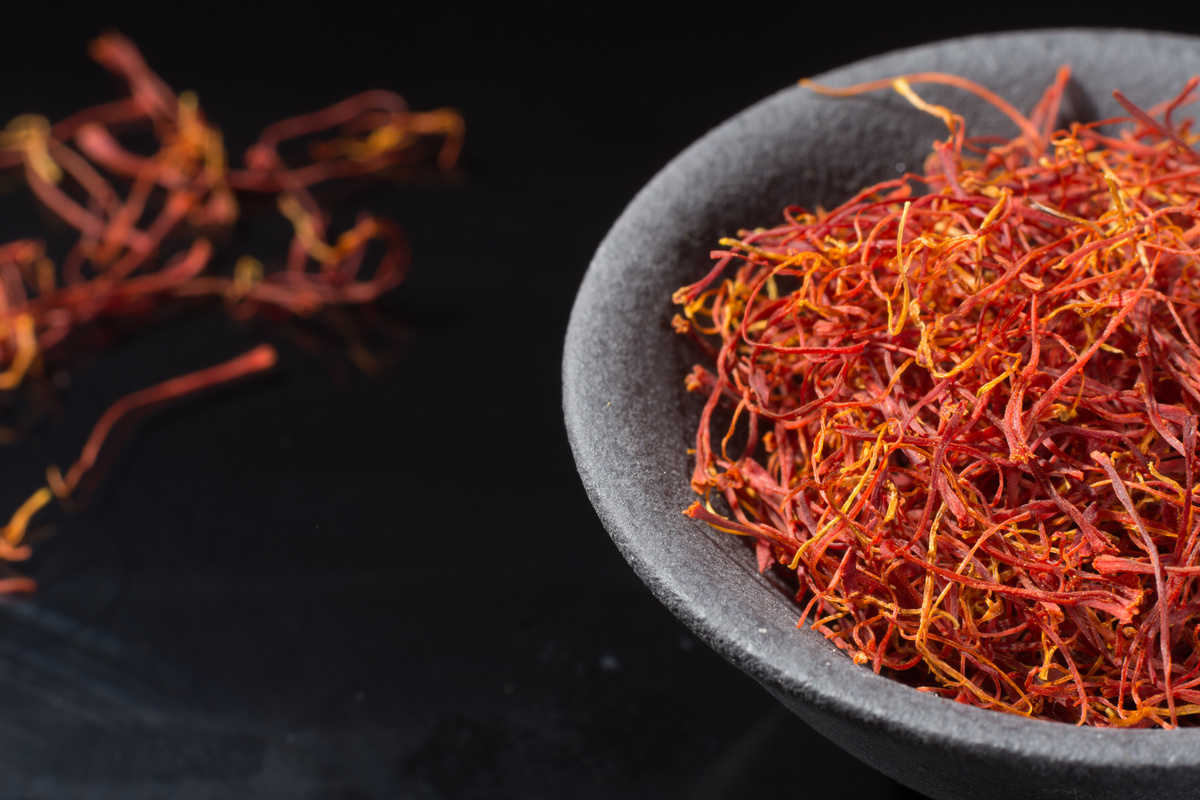
Saffron comes from the flowering plant Crocus sativus. It is harvested as fine threads, then dried and often powdered for use.
The spice is prized for its flavour and colour in foods. It is cultivated mainly in India, Iran, Italy and Spain.
Because each thread must be hand-picked, it remains one of the world’s most expensive spices. The cost reflects not just rare labour but also the nutrient-rich essential oils inside the stigma that are used in natural supplement formulations. ¹
How Does Saffron Work in the Body?
Saffron contains active compounds such as crocin, crocetin and safranal. These compounds are studied for how they affect the body. Research shows saffron may: ²
- Support digestive health by increasing blood flow and easing conditions like gastritis, irritable bowel syndrome (IBS) and peptic ulcers.
- Influence mood and cognition by enhancing production of neurotransmitters including dopamine and serotonin.
- Exhibit antioxidant and anti-inflammatory effects, which help protect brain and body cells from oxidative stress.
For example, studies report that saffron helps modulate the brain’s glutamate and GABA systems, inhibit acetylcholinesterase (an enzyme that breaks down acetylcholine), and alter the hypothalamic-pituitary-adrenal (HPA) axis (which regulates stress hormones).
These mechanisms suggest how saffron might contribute not just to digestive and mood changes, but potentially to attention and focus too. ³

Can You Use Saffron for ADHD?
Yes, it’s possible. Early research shows that using saffron for ADHD may help reduce symptoms of the condition. Two properties of saffron stand out:
- It can improve blood flow, which may help the brain receive more oxygen and support better concentration.
- It may boost dopamine (and other neurotransmitters), which can lift mood, help with focus, and improve productivity.
Still, the evidence is limited and we cannot yet confirm saffron as a proven treatment for ADHD.
What Does the Research Say?
The research on saffron and ADHD is promising but preliminary:
- A 2024 systematic review found that saffron extract showed benefit as either a stand-alone treatment or an add-on therapy for ADHD, with an acceptable safety profile. ⁴
- A 2019 randomized, double-blind pilot study compared saffron (20–30 mg/day) with Methylphenidate in children aged 6–17 and found no significant difference in symptom scores between the two groups. ⁵
- A non-randomized clinical trial in ADHD children/adolescents (ages 7–17) found that saffron was more effective for hyperactivity symptoms, while methylphenidate was more effective for inattention. ⁶
However, limitations remain: small sample sizes, short study durations, and few assessments of executive function or long-term outcomes.

Saffron Dosage Recommendation
Here’s a simple dosage table and guidance on how the spice extract may be used when looking at saffron for ADHD and other mental-health support.
| Condition | Typical Dosage* | Notes / Evidence |
| ADHD (children/adolescents) | 20–30 mg daily (e.g., 20 mg for <30 kg body weight; 30 mg for >30 kg) | Based on a 6-week trial comparing with methylphenidate. |
| ADHD (adjunct therapy with medication) | ~15 mg twice daily (≈30 mg/day) alongside stimulant medication | Evidence for combining with medication; consult a professional. |
| Other mental-health conditions (anxiety, mild depression) | Start at ~20 mg/day; increase up to ~50 mg/day if no improvement | Study data for mood/anxiety uses ~30 mg/day. |
| Upper safety limits (non-therapeutic guideline) | Avoid going above 100 mg in a single dose or total daily intake >1.5 g (1500 mg) | Much higher doses have not been well studied and can carry risk. |
*Always consult a healthcare professional before starting any supplement, especially when using it for a condition like ADHD or when combining with other medications.
Saffron Safety & Side Effects
In most clinical studies of saffron, low to moderate doses have been well tolerated. However, some people may experience: ⁷
- Changes in appetite (increase or decrease)
- Dizziness or light-headedness
- Dry mouth
- Headaches
- Irritability
- Nausea
These side-effects tend to be mild and go away when the dose is lowered or the supplement is stopped.
Risks with Higher Doses
While small doses (e.g., under 100 mg/day) are typically safe, much higher doses of saffron can pose risks. Research shows:
- Doses up to ~1.5 g/day are considered within the “generally safe” range for humans.
- Doses above ~5 g/day have been associated with toxic effects such as bleeding, vomiting, and other serious problems.
- In extreme cases, very large doses of saffron (10 g+ or more) may be life-threatening.
If someone takes a dose beyond these recommendations, they may face serious symptoms including:
- Blood in urine or stool
- Vomiting or overwhelming nausea
- Disorientation or confusion
These are more rare but important to flag.
Specific Precautions and Who Should Avoid It
There are certain groups who should be especially cautious or avoid saffron supplementation altogether:
- Pregnant women – Saffron in high doses may stimulate the uterus and could increase the risk of miscarriage. ⁸
- People on blood-pressure medications or blood-thinners – Saffron may affect blood pressure or interact with anticoagulant or antiplatelet drugs. ⁹
- People with bleeding disorders – Because saffron may influence platelet aggregation and blood clotting, caution is advised.
- Those undergoing surgery – Some sources advise stopping saffron supplements at least 2 weeks before surgery because it may affect bleeding or interact with anesthesia.
Using Saffron with ADHD Medications such as Adderall
If you’re taking stimulant medications like Adderall (commonly used for ADHD), you should be very careful:
- There is no established research confirming the safety of combining saffron with Adderall.
- Switching from Adderall to saffron (or adding saffron) could disrupt your ADHD treatment plan.
- Always consult your healthcare provider before adding saffron if you’re on ADHD medication.
Swanson Superior Herbs have been around since 1969. They have a unique process for ensuring top-of-the-line quality and assurances that their ingredients are properly effective.

Final Word
It’s natural to wonder if saffron for ADHD might be a good option. In fact, the research shows it holds real potential. Several small studies found that saffron extract can reduce core ADHD symptoms with fewer side effects than standard stimulant medications.
That said, we don’t yet have large-scale, long-term trials, so it should not replace proven treatments. Always talk with a healthcare professional before you add saffron or other supplements into your ADHD treatment plan.
Frequently Asked Questions (FAQs)
Can saffron be used as a standalone treatment for ADHD?
No. While the research into using saffron for ADHD is promising (small studies suggest benefit in attention, hyperactivity and sleep issues) it isn’t a proven replacement for established treatments. If you’re considering saffron, it should be as part of a managed plan with a healthcare provider, not as the only treatment.
Is saffron safe to take with ADHD medications like Adderall or methylphenidate?
There is no definitive research confirming the safety of combining saffron with stimulant medications like Methylphenidate (Ritalin) or Adderall. Because of the potential for interactions (e.g., affecting neurotransmitter systems, blood flow, or other medications), you should always consult your healthcare provider before combining saffron with ADHD medications.
How long does it take to see results when using saffron for ADHD symptoms?
In the existing studies, improvements in ADHD symptoms (like reduced hyperactivity and better attention) were reported after about 4–6 weeks of saffron supplementation. Because the evidence base is small, it’s wise to set realistic expectations: saffron is not an overnight fix, and monitoring with your healthcare provider is important to determine if it’s helping in your situation.
How does saffron work in the brain to help with ADHD?
Saffron contains compounds such as crocin, crocetin, and safranal that may influence neurotransmitters like dopamine and serotonin. These compounds can help improve attention, regulate mood, and reduce hyperactivity in some individuals. Saffron may also increase blood flow to the brain, supporting focus and cognitive function.
Can adults benefit from saffron for ADHD, or is it only for children?
While most studies focus on children and adolescents, emerging research suggests adults with ADHD may also experience some benefit from saffron supplementation, especially for mood, focus, and sleep quality. However, adult dosing hasn’t been standardized, so guidance from a healthcare professional is recommended.
References
¹ El Midaoui A, Ghzaiel I, Vervandier-Fasseur D, Ksila M, Zarrouk A, Nury T, Khallouki F, El Hessni A, Ibrahimi SO, Latruffe N, Couture R, Kharoubi O, Brahmi F, Hammami S, Masmoudi-Kouki O, Hammami M, Ghrairi T, Vejux A, Lizard G. Saffron (Crocus sativus L.): A Source of Nutrients for Health and for the Treatment of Neuropsychiatric and Age-Related Diseases. Nutrients. 2022 Jan 29;14(3):597. doi: 10.3390/nu14030597. PMID: 35276955; PMCID: PMC8839854.
² Ashktorab H, Soleimani A, Singh G, Amin A, Tabtabaei S, Latella G, Stein U, Akhondzadeh S, Solanki N, Gondré-Lewis MC, Habtezion A, Brim H. Saffron: The Golden Spice with Therapeutic Properties on Digestive Diseases. Nutrients. 2019 Apr 26;11(5):943. doi: 10.3390/nu11050943. PMID: 31027364; PMCID: PMC6567082.
³ Jackson PA, Forster J, Khan J, Pouchieu C, Dubreuil S, Gaudout D, Moras B, Pourtau L, Joffre F, Vaysse C, Bertrand K, Abrous H, Vauzour D, Brossaud J, Corcuff JB, Capuron L, Kennedy DO. Effects of Saffron Extract Supplementation on Mood, Well-Being, and Response to a Psychosocial Stressor in Healthy Adults: A Randomized, Double-Blind, Parallel Group, Clinical Trial. Front Nutr. 2021 Feb 1;7:606124. doi: 10.3389/fnut.2020.606124. PMID: 33598475; PMCID: PMC7882499.
⁴ Seyedi-Sahebari S, Farhang S, Araj-Khodaei M, Akhondzadeh S, Naseri A, Sanaie S, Frounchi N. The Effects of Crocus sativus (Saffron) on ADHD: A Systematic Review. J Atten Disord. 2024 Jan;28(1):14-24. doi: 10.1177/10870547231203176. Epub 2023 Oct 21. PMID: 37864351.
⁵ Baziar S, Aqamolaei A, Khadem E, Mortazavi SH, Naderi S, Sahebolzamani E, Mortezaei A, Jalilevand S, Mohammadi MR, Shahmirzadi M, Akhondzadeh S. Crocus sativus L. Versus Methylphenidate in Treatment of Children with Attention-Deficit/Hyperactivity Disorder: A Randomized, Double-Blind Pilot Study. J Child Adolesc Psychopharmacol. 2019 Apr;29(3):205-212. doi: 10.1089/cap.2018.0146. Epub 2019 Feb 11. PMID: 30741567.
⁶ Blasco-Fontecilla H, Moyano-Ramírez E, Méndez-González O, Rodrigo-Yanguas M, Martin-Moratinos M, Bella-Fernández M. Effectivity of Saffron Extract (Saffr’Activ) on Treatment for Children and Adolescents with Attention Deficit/Hyperactivity Disorder (ADHD): A Clinical Effectivity Study. Nutrients. 2022 Sep 28;14(19):4046. doi: 10.3390/nu14194046. PMID: 36235697; PMCID: PMC9573091.
⁷ Bostan HB, Mehri S, Hosseinzadeh H. Toxicology effects of saffron and its constituents: a review. Iran J Basic Med Sci. 2017 Feb;20(2):110-121. doi: 10.22038/ijbms.2017.8230. PMID: 28293386; PMCID: PMC5339650.
⁸ Sadi R, Mohammad-Alizadeh-Charandabi S, Mirghafourvand M, Javadzadeh Y, Ahmadi-Bonabi A. Effect of Saffron (Fan Hong Hua) On the Readiness of The Uterine Cervix In Term Pregnancy: A Placebo-Controlled Randomized Trial. Iran Red Crescent Med J. 2016 Jun 20;18(10):e27241. doi: 10.5812/ircmj.27241. PMID: 28180016; PMCID: PMC5285732.
⁹ Setayesh L, Ashtary-Larky D, Clark CCT, Rezaei Kelishadi M, Khalili P, Bagheri R, Asbaghi O, Suzuki K. The Effect of Saffron Supplementation on Blood Pressure in Adults: A Systematic Review and Dose-Response Meta-Analysis of Randomized Controlled Trials. Nutrients. 2021 Aug 9;13(8):2736. doi: 10.3390/nu13082736. PMID: 34444896; PMCID: PMC8398601.




Leave a Reply