St. John’s Wort for OCD is a popular topic among people looking to avoid pharmaceuticals. Can it help? Possibly, but the research is limited and mixed, so it isn’t a proven treatment.
But how safe is St. John’s Wort? And is it really as effective as people claim it is?
Throughout this article, we’ll cover what the research says, typical dosage, and possible risks. If you’re looking for natural alternatives, you can find more options in our guide to OCD herbal remedies.
Key Highlights
- Limited and mixed research – Studies on St. John’s Wort for OCD are small and inconclusive, with one study reporting improvement and another finding no change, so it isn’t a proven treatment.
- Typical dosage – Clinical trials, mostly in depression, have used 300mg in capsule form three times daily, though potency varies by brand and form.
- Interaction and side-effect risks – St. John’s Wort can interact with other medications, especially antidepressants, and may cause side effects such as fatigue, stomach irritation, and skin sensitivity, so it should only be used under a doctor’s guidance.
Table of Contents
What is St. John’s Wort?
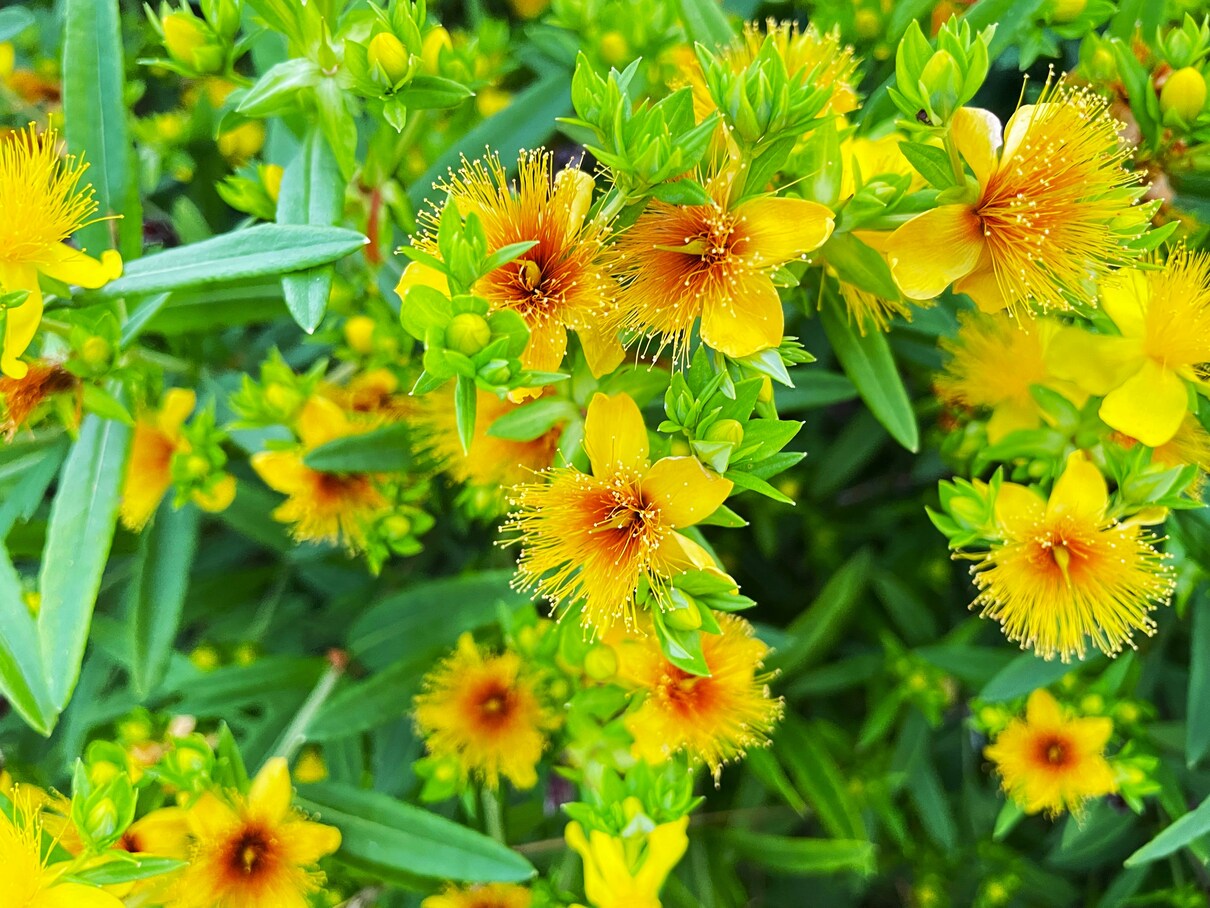
St. John’s Wort is a plant with yellow flowers used in herbal medicine since the Ancient Greeks. You can take it orally and topically to garner its healing properties. While there isn’t enough research to make any claims, some suggest it can work as an anti-inflammatory and for mental health conditions, such as depression and anxiety. ¹
Known botanically as Hypericum perforatum, it was traditionally used for nerve pain, migraines, and skin wounds. Its effects are usually credited to two active compounds, hypericin and hyperforin, though the strength of a supplement can vary quite a bit from one product to the next. Most of the research also focuses on depression, so those results don’t automatically apply to OCD.
Can You Use St. John’s Wort for OCD?
Many use St. John’s Wort for OCD treatment, believing that its internal properties aid with neurological functionality. In fact, recent research has found that St. John’s Wort works similarly to SSRI antidepressants, a common medication prescribed for OCD’s depressive episodes.
While St. John’s Wort is widely known for its benefits for depression, new insight suggests it can aid in OCD. More specifically, studies claim that St. John’s Wort can alleviate the symptoms of various anxiety disorders. ²
These benefits come from St. John’s Wort’s active properties, specifically hypericum. Hypericum changes serotonin development in the brain. Serotonin is a chemical that causes the brain to experience happiness, therefore playing an integral role in treating mental health. ³
One research study found that 40% of participants saw improvement from St. John’s Wort. Unfortunately, there isn’t enough research to claim this supplement is an effective alternative. However, many have self-reported feeling relief from OCD symptoms and behaviors.
Since St. John’s Wort is relatively safe, it’s worth giving a try if you haven’t had success with traditional medication.
What Does the Research Say?
Although studies have looked into St. John’s Wort’s effects on OCD, they’re limited:
- A 2000 study revealed that St. John’s Wort showed “significant improvement” in OCD and that the effect was “similar to that found in clinical trials.” Thus showing a correlation between the claims that St. John’s Wort yielded an effective result.
- A reference list of natural supplements and mental health conditions, provided by the American Family Physicians Foundation, included St. John’s Wort. More specifically, its application to the treatment of OCD.
- Still, a 2005 study found there were no developmental changes in using St. John’s Wort for OCD. Admittedly, St. John’s Wort didn’t result in a negative reaction either. The researchers mentioned that more clinical research is recommended, citing that St. John’s Wort deserves more insight into its impact on mental health conditions.

St. John’s Wort Dosage Recommendation
To treat mental health conditions, you need to take St. John’s Wort at a consistent, measured daily dose. In clinical trials, the most common adult dose is 300mg taken three times daily with food. ⁴ Unlike many medications, St. John’s Wort dosing isn’t adjusted by body weight. Studies use the same fixed amounts for adults, and some people start lower and work up gradually:
| Stage | Typical Daily Dose | How It’s Taken |
| Starting dose | 300mg per day | Some people start low and increase every few weeks to reduce side effects |
| Standard dose | 900mg per day | 300mg three times a day with food |
| Upper limit | 1,800mg per day | Doses above this aren’t recommended |
Keep in mind that these numbers come from depression research, and there’s no established dose for OCD. A doctor can help you decide whether St. John’s Wort makes sense for you, especially if you take other medications.
What are the Risks with St. John’s Wort?
Most of St. John’s Wort’s risks come from interactions with other medications. Most notably, taking St. John’s Wort with antidepressants can cause serious side effects. Therefore, you should only take St. John’s Wort under a doctor’s guidance.
Common side effects of St. John’s Wort include: ⁵
- Disorientation (i.e., headaches, dizziness)
- Drug interactions
- Fatigue
- Increased sensitivity of the skin and eyes (i.e., to touch or to light)
- Liver toxicity (with prolonged use or increased dosages)
- Shifting moods with irritability and anxiety
- Sleep difficulties (i.e., oversleeping and vivid dreams)
- Stomach irritation
Final Word
St. John’s Wort for OCD is an appealing option for people who want to avoid pharmaceuticals, but the evidence just isn’t strong enough to call it a proven treatment. Most of the research focuses on depression, and the few OCD studies show mixed results. It also interacts with many medications, antidepressants in particular, so talk to your doctor before trying it.
If you’re struggling with OCD symptoms, a healthcare professional can help you build a plan that’s safe and effective for you.
Frequently Asked Questions (FAQs)
What medications interact with St. John’s Wort?
Common problem drugs include antidepressants, birth control pills, blood thinners, HIV and hepatitis C medicines, transplant drugs, seizure medicines, and some statins. Check with your doctor or pharmacist before combining it with any prescription.
Can you take St. John’s Wort with birth control?
It’s not recommended. It might cause breakthrough bleeding or an unplanned pregnancy, and you may need a second or different form of birth control.
Is St. John’s Wort safe during pregnancy?
It’s considered possibly unsafe by mouth during pregnancy, and experts advise against using it until more is known.
Is St. John’s Wort FDA approved?
No. It’s an over-the-counter supplement, so there’s no official dosage proven safe and effective.
Should you stop taking St. John’s Wort before surgery?
Yes. You shouldn’t take it within five days of a planned surgical procedure because of the risk of medication interactions. Tell your surgical team about any supplements you take.
References
¹ Peterson B, Nguyen H. St. John’s Wort. 2023 May 16. In: StatPearls [Internet]. Treasure Island (FL): StatPearls Publishing; 2024 Jan–. PMID: 32491397.
² Shelton RC, Keller MB, Gelenberg A, Dunner DL, Hirschfeld R, Thase ME, Russell J, Lydiard RB, Crits-Cristoph P, Gallop R, Todd L, Hellerstein D, Goodnick P, Keitner G, Stahl SM, Halbreich U. Effectiveness of St John’s wort in major depression: a randomized controlled trial. JAMA. 2001 Apr 18;285(15):1978-86. doi: 10.1001/jama.285.15.1978. PMID: 11308434.
³ Klemow KM, Bartlow A, Crawford J, et al. Medical Attributes of St. John’s Wort (Hypericum perforatum) In: Benzie IFF, Wachtel-Galor S, editors. Herbal Medicine: Biomolecular and Clinical Aspects. 2nd edition. Boca Raton (FL): CRC Press/Taylor & Francis; 2011. Chapter 11. Available from: https://www.ncbi.nlm.nih.gov/books/NBK92750/
⁴ Ng QX, Venkatanarayanan N, Ho CY. Clinical use of Hypericum perforatum (St John’s wort) in depression: A meta-analysis. J Affect Disord. 2017 Mar 1;210:211-221. doi: 10.1016/j.jad.2016.12.048. Epub 2017 Jan 3. PMID: 28064110.
⁵ Parker V, Wong AH, Boon HS, Seeman MV. Adverse reactions to St John’s Wort. Can J Psychiatry. 2001 Feb;46(1):77-9. doi: 10.1177/070674370104600112. PMID: 11221494.




Leave a Reply