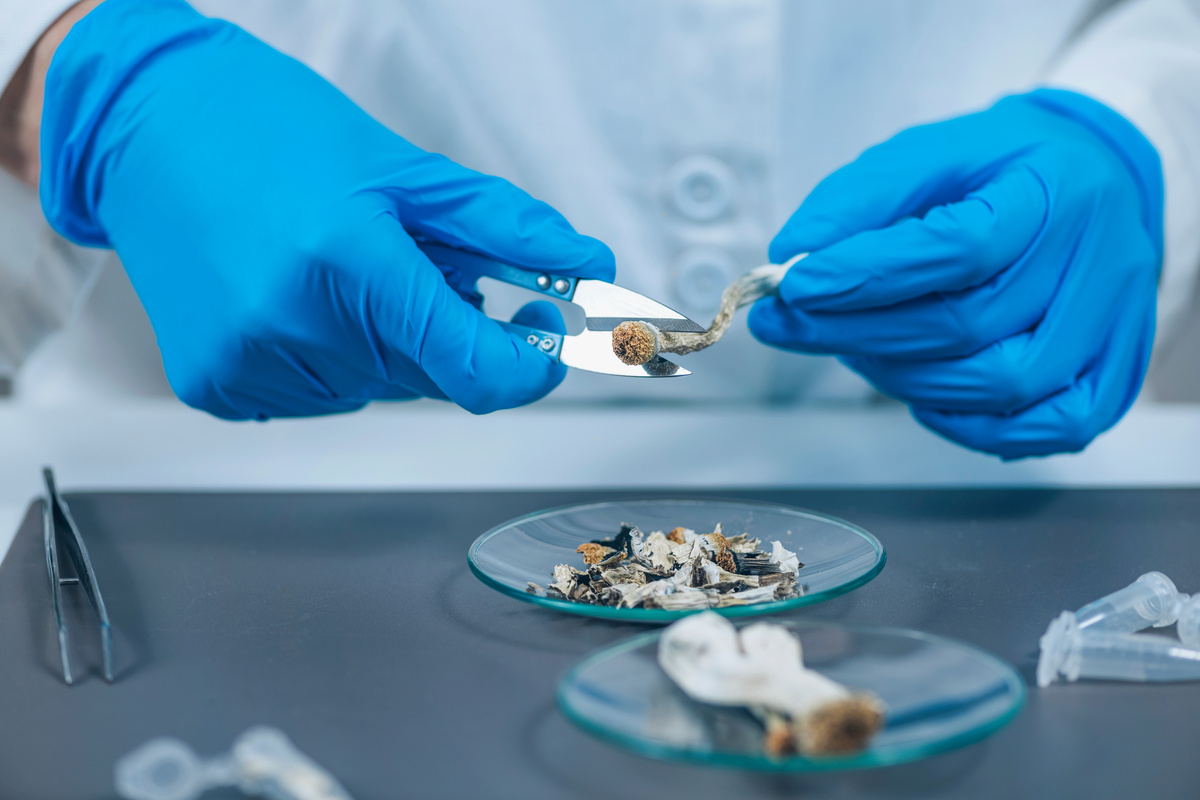
Can you use psilocybin for depression? While some early research and personal accounts suggest psilocybin may offer benefits for depression, it is not currently approved as a treatment.
Psilocybin mushrooms (also known as “magic mushrooms”) contain psilocybin, a naturally occurring hallucinogenic compound that has attracted attention for its potential effects on mental health.
However, these claims remain uncertain due to limited research, and psilocybin is still illegal in the United States, classified as a Schedule I drug, meaning it has no accepted medical use at this time.
Key Highlights
- Potential Benefits and Current Status – Early research and anecdotal evidence suggest psilocybin for depression may provide rapid mood improvements, but it remains unapproved by the FDA and classified as illegal at the federal level.
- Safety and Risks – Psilocybin can cause both positive and negative psychological effects; bad trips and overdose risks exist, especially in uncontrolled environments or with improper dosing.
- Legal and Medical Considerations – Psilocybin is illegal federally but decriminalized or allowed for therapeutic use in some U.S. cities and states. Honest communication with healthcare providers is crucial if considering its use.
Table of Contents
What Are Psilocybin Mushrooms?
Psilocybin mushrooms are psychedelic fungi that grow in the wild or can be cultivated. People have used them for thousands of years in spiritual and medicinal practices because of their hallucinogenic effects. In 1958, Swiss chemist Dr. Albert Hofmann, who also discovered LSD, was the first to isolate psilocybin, the active compound in these mushrooms. ¹
Most users dry the mushrooms and eat them with food or drinks, though some choose to eat them fresh.
On the street, psilocybin mushrooms are often called:
- Shrooms
- Mushies
- Blue meanies
- Golden tops
- Liberty caps
Psilocybin is classified as a hallucinogen. Its effects are similar to other psychedelic substances like cannabis, mescaline, LSD, ayahuasca, and DMT.
How Does Psilocybin Work in the Brain and Body?
Psilocybin mushrooms can cause people to see, hear, or feel things that aren’t real. These effects vary from person to person. The environment often plays a big role in shaping the experience. ²
After ingestion, psilocybin converts into psilocin in the body. Psilocin is believed to activate serotonin receptors in the brain’s prefrontal cortex. This area controls mood, thinking, and perception. ³ ⁴
Psilocybin may also affect parts of the brain that regulate stress and alertness. However, it doesn’t always cause strong hallucinations. Some people feel emotional shifts or changes in thought instead.
The experience depends on many factors. These include: ⁵
- How much psilocybin is taken
- Past experiences
- Current mood and expectations
- The setting
- The people involved
Most users feel the effects about 30 minutes after taking the mushrooms. The experience usually lasts four to six hours. In some cases, changes in thinking or perception may continue for days.

Can You Use Psilocybin for Depression?
Some early research suggests psilocybin may help with depression, but it’s still unclear how effective it is. More studies are needed before any conclusions can be made.
One study from the United Kingdom looked at psilocybin in people with treatment-resistant depression. The results showed potential, but the study had no control group. This made it hard to draw solid conclusions. ⁶
Researchers have noted that psilocybin may work faster than traditional antidepressants. Most antidepressants take several weeks to show results, while psilocybin appears to act more quickly. Still, there are no long-term studies to show how lasting these effects are.
Much of what we know comes from people who have self-medicated. These personal stories can be helpful, but they’re not always reliable. Many are based on bias or uncontrolled situations. Someone who enjoys the psychedelic experience might assume it helps everyone, which may not be true.
Psilocybin is still classified as a Schedule I drug. This means psychiatrists do not prescribe it, and it’s not approved for medical use. If you’re struggling with depression, it’s important to explore approved treatment options first. For those with treatment-resistant depression, any decision to try psychedelics should come only after careful research and medical consultation.
What Does the Research Say?
So far, only a few studies have explored psilocybin’s potential to treat depression.
- A 2017 study published in Neuropharmacology found that psilocybin reduced symptoms of depression without dulling emotions. ⁷
- A 2018 study looked at the connection between psilocybin-induced hallucinations and positive therapy outcomes. It found that psilocybin may lead to long-term improvements in mood. ⁸
Johns Hopkins University has also led research on psilocybin and mental health. In one small study, just two doses of psilocybin combined with psychotherapy caused a rapid and major drop in depression symptoms.
The Johns Hopkins Center for Psychedelic & Consciousness Research is now in Phase II clinical trials. If psilocybin passes Phase III, scientists believe it could be reclassified and removed from the Schedule I drug list.
Other Potential Benefits of Psilocybin
Researchers are also studying psilocybin as a potential treatment for several other conditions, including:
- Alzheimer’s disease
- Anorexia nervosa
- Depression with alcohol use disorder
- Smoking addiction
While these early studies show promise, the research is still limited. There’s not enough evidence yet to confirm psilocybin is effective for any of these conditions.

Psilocybin Safety and Side Effects
Psilocybin isn’t risk-free. Like all hallucinogens, it can cause negative psychological reactions, especially when taken in unsafe settings or mixed with other substances like alcohol.
One of the most common concerns is a “bad trip.” This can include: ⁹
- Paranoia
- Delusions
- Intense fear or panic
- Disturbing hallucinations
- In rare cases, convulsions
Other short-term effects may include:
- Dilated pupils
- Distorted perception (sense of time, place, reality)
- Drowsiness
- Feelings of spirituality
- Hallucinations
- Headaches
- Increased blood pressure, heart rate, and temperature
- Lack of coordination
- Muscle weakness
- Nausea
- Nervousness
- Paranoia (sometimes a panic reaction)
- Psychosis
- Yawning
Researchers still don’t fully understand psilocybin’s long-term impact. Some users report: ¹⁰
- Personality changes
- Recurring flashbacks
- Lingering changes in perception
Furthermore, because psilocybin mushrooms are illegal, you’re exposed to extra dangers:
- The mushrooms may be contaminated or misidentified. One study found that only 28% of street mushrooms actually contained psilocybin. ¹¹
- You don’t know the exact dose you’re getting.
If you think you or someone else may have eaten a poisonous mushroom, call Poison Control at 800-222-1222 right away.
Can You Overdose on Psilocybin?
While there are no known deaths directly linked to psilocybin, overdose is still possible, especially with high doses or repeated use. ¹²
An overdose can lead to intense and unpleasant physical or psychological effects, including:
- Agitation
- Diarrhea
- Muscle weakness
- Panic (paranoia)
- Psychosis
- Seizures
- Vomiting
Furthermore, some users accidentally ingest fly agaric mushrooms, which are toxic and not the same as psilocybin mushrooms. Consuming fly agaric can lead to:
- Drooling
- Dizziness
- Delirium
- Twitching
- Severe nausea and vomiting
Regular users may build a tolerance to psilocybin. This means they need larger doses to achieve the same effects, which raises the risk of overdose, especially if dosing is imprecise.

Psilocybin for Depression Dosage Recommendation
Psilocybin is not FDA-approved and remains illegal. Because of this, there are no official dosage guidelines. Plus, when you buy mushrooms illegally, you can’t be sure how much psilocybin they contain. This makes dosing very uncertain.
If you still choose to use psilocybin, here’s a rough guide based on mushrooms containing 1% psilocybin:
| Dried Mushrooms | Estimated Psilocybin | |
| Low Dose | 1 gram | 10mg |
| Medium Dose | 1.75 grams | 17.5mg |
| High Dose | 3.5 grams | 35mg |
| Very High Dose | 5 grams | 50mg |
Many users prefer microdosing over full trips. Microdosing means taking a very small amount to gain benefits without strong hallucinations. Typical microdoses range from 0.25 to 0.5 grams of dried mushrooms. ¹³
Are Psilocybin Mushrooms Legal?
Psilocybin mushrooms are illegal at the federal level in the U.S. They are classified as a Schedule I substance. This means they are considered to have no accepted medical use and a high potential for abuse.
However, some places have started to change their laws:
- Decriminalized for recreational use in:
- Ann Arbor, Michigan
- Denver, Colorado
- Oakland, California
- Santa Cruz, California
- Somerville, Massachusetts
- Cambridge Massachusetts
- Washington D.C.
- Legal for supervised mental health treatment in Oregon.
- Some states allow psilocybin mushrooms for religious ceremonies.
- In Canada, psilocybin mushrooms are legal for treating certain mental illnesses under specific conditions.
Other Natural Remedies for Depression
Because psilocybin carries some psychological risks, it’s wise to try other natural treatments for depression first. Here are a few options that many people find helpful:
Rhodiola (Rhodiola rosea)
This supplement may boost energy, improve sleep, and support mental health. One study showed Rhodiola changes the blood-brain barrier, letting certain endorphins enter the brain to help manage stress. ¹⁴
Saffron
Saffron contains antioxidants that may lift your mood. Research suggests it helps serotonin stay longer in the brain, improving mood. In one review, saffron reduced depression symptoms better than a placebo. ¹⁵
Omega-3 Fatty Acids
Omega-3s are essential fats our bodies can’t make, so we must get them from foods like fish or supplements. Studies found omega-3 supplements can lower depression symptoms, especially in pregnancy and postpartum depression. ¹⁶
Final Word
If you’re still considering psilocybin, a word of caution is essential. Because so little is known about magic mushrooms and many people report bad experiences, using them could put you at risk for further mental or emotional issues.
If you do choose to take a psychedelic, it’s crucial to be in the right environment and surround yourself with people you trust. Although research is limited, these factors seem to have a major impact on the experience.
Also, even if your psychiatrist doesn’t approve, it’s important to be honest with them about your plans or use of psilocybin. Open communication can help keep you safer.
Frequently Asked Questions (FAQs)
Is psilocybin effective for treating depression?
While some studies show promising results, psilocybin is not currently FDA-approved for depression treatment. More large-scale, long-term research is needed to confirm its safety and efficacy.
What are the risks and side effects of using psilocybin for depression?
Psilocybin can cause hallucinations, paranoia, anxiety, and in rare cases, psychosis or seizures. Bad trips are common if taken in unsafe settings. Long-term effects are not well understood.
Is psilocybin legal for depression treatment?
Psilocybin is federally illegal in the U.S., classified as a Schedule I drug. However, some cities and states have decriminalized it or allowed supervised therapeutic use, such as Oregon’s recent law.
How does psilocybin work in the brain to affect depression?
Psilocybin converts to psilocin, which interacts with serotonin receptors in the brain’s prefrontal cortex, potentially altering mood, perception, and emotional regulation.
Can I discuss psilocybin use with my psychiatrist?
Yes, even if your psychiatrist does not approve of psilocybin use, open communication is important to ensure your safety and coordinate appropriate mental health care.
References
¹ Geiger HA, Wurst MG, Daniels RN. DARK Classics in Chemical Neuroscience: Psilocybin. ACS Chem Neurosci. 2018 Oct 17;9(10):2438-2447. doi: 10.1021/acschemneuro.8b00186. Epub 2018 Jul 16. PMID: 29956917.
² de Mattos-Shipley KM, Ford KL, Alberti F, Banks AM, Bailey AM, Foster GD. The good, the bad and the tasty: The many roles of mushrooms. Stud Mycol. 2016 Sep;85:125-157. doi: 10.1016/j.simyco.2016.11.002. Epub 2016 Nov 11. PMID: 28082758; PMCID: PMC5220184.
³ Lee HM, Roth BL. Hallucinogen actions on human brain revealed. Proc Natl Acad Sci U S A. 2012 Feb 7;109(6):1820-1. doi: 10.1073/pnas.1121358109. Epub 2012 Jan 30. PMID: 22308478; PMCID: PMC3277578.
⁴ Madsen MK, Fisher PM, Burmester D, Dyssegaard A, Stenbæk DS, Kristiansen S, Johansen SS, Lehel S, Linnet K, Svarer C, Erritzoe D, Ozenne B, Knudsen GM. Psychedelic effects of psilocybin correlate with serotonin 2A receptor occupancy and plasma psilocin levels. Neuropsychopharmacology. 2019 Jun;44(7):1328-1334. doi: 10.1038/s41386-019-0324-9. Epub 2019 Jan 26. Erratum in: Neuropsychopharmacology. 2019 Jun;44(7):1336-1337. doi: 10.1038/s41386-019-0360-5. PMID: 30685771; PMCID: PMC6785028.
⁵ Schlag AK, Aday J, Salam I, Neill JC, Nutt DJ. Adverse effects of psychedelics: From anecdotes and misinformation to systematic science. J Psychopharmacol. 2022 Mar;36(3):258-272. doi: 10.1177/02698811211069100. Epub 2022 Feb 2. PMID: 35107059; PMCID: PMC8905125.
⁶ Carhart-Harris RL, Bolstridge M, Rucker J, Day CM, Erritzoe D, Kaelen M, Bloomfield M, Rickard JA, Forbes B, Feilding A, Taylor D, Pilling S, Curran VH, Nutt DJ. Psilocybin with psychological support for treatment-resistant depression: an open-label feasibility study. Lancet Psychiatry. 2016 Jul;3(7):619-27. doi: 10.1016/S2215-0366(16)30065-7. Epub 2016 May 17. PMID: 27210031.
⁷ Roseman L, Demetriou L, Wall MB, Nutt DJ, Carhart-Harris RL. Increased amygdala responses to emotional faces after psilocybin for treatment-resistant depression. Neuropharmacology. 2018 Nov;142:263-269. doi: 10.1016/j.neuropharm.2017.12.041. Epub 2017 Dec 27. PMID: 29288686.
⁸ Roseman L, Nutt DJ, Carhart-Harris RL. Quality of Acute Psychedelic Experience Predicts Therapeutic Efficacy of Psilocybin for Treatment-Resistant Depression. Front Pharmacol. 2018 Jan 17;8:974. doi: 10.3389/fphar.2017.00974. PMID: 29387009; PMCID: PMC5776504.
⁹ Jo WS, Hossain MA, Park SC. Toxicological profiles of poisonous, edible, and medicinal mushrooms. Mycobiology. 2014 Sep;42(3):215-20. doi: 10.5941/MYCO.2014.42.3.215. Epub 2014 Sep 30. PMID: 25346597; PMCID: PMC4206786.
¹⁰ Hermle L, Simon M, Ruchsow M, Geppert M. Hallucinogen-persisting perception disorder. Ther Adv Psychopharmacol. 2012 Oct;2(5):199-205. doi: 10.1177/2045125312451270. PMID: 23983976; PMCID: PMC3736944.
¹¹ Krebs TS, Johansen PØ. Over 30 million psychedelic users in the United States. F1000Res. 2013 Mar 28;2:98. doi: 10.12688/f1000research.2-98.v1. PMID: 24627778; PMCID: PMC3917651.
¹² Reinert JP, Colunga K, Etuk A, Richardson V, Dunn RL. Management of overdoses of salvia, kratom, and psilocybin mushrooms: a literature review. Expert Rev Clin Pharmacol. 2020 Aug;13(8):847-856. doi: 10.1080/17512433.2020.1794811. Epub 2020 Jul 25. PMID: 32648791.
¹³ Polito V, Stevenson RJ. A systematic study of microdosing psychedelics. PLoS One. 2019 Feb 6;14(2):e0211023. doi: 10.1371/journal.pone.0211023. PMID: 30726251; PMCID: PMC6364961.
¹⁴ Mao JJ, Li QS, Soeller I, Xie SX, Amsterdam JD. Rhodiola rosea therapy for major depressive disorder: a study protocol for a randomized, double-blind, placebo- controlled trial. J Clin Trials. 2014 Jun 20;4:170. doi: 10.4172/2167-0870.1000170. PMID: 25610752; PMCID: PMC4297663.
¹⁵ Hausenblas HA, Saha D, Dubyak PJ, Anton SD. Saffron (Crocus sativus L.) and major depressive disorder: a meta-analysis of randomized clinical trials. J Integr Med. 2013 Nov;11(6):377-83. doi: 10.3736/jintegrmed2013056. PMID: 24299602; PMCID: PMC4643654.
¹⁶ Zhang MM, Zou Y, Li SM, Wang L, Sun YH, Shi L, Lu L, Bao YP, Li SX. The efficacy and safety of omega-3 fatty acids on depressive symptoms in perinatal women: a meta-analysis of randomized placebo-controlled trials. Transl Psychiatry. 2020 Jun 17;10(1):193. doi: 10.1038/s41398-020-00886-3. PMID: 32555188; PMCID: PMC7299975.




Leave a Reply