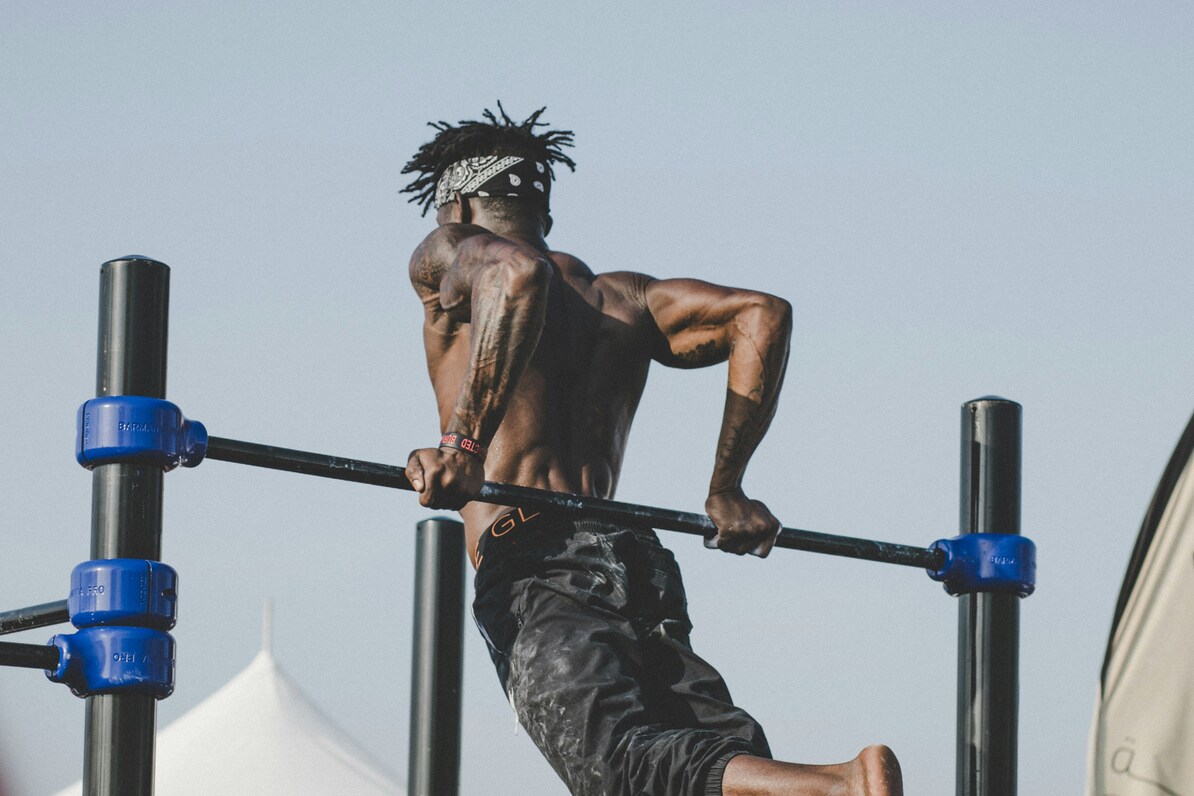
Testosterone is one of the most important hormones for male health. Yet, it’s been on an overall decline over the past few decades. With that in mind, you may wonder how to naturally increase testosterone. From the best diets to exercise, here’s our list of holistic testosterone boosters.
What is Testosterone?
Testosterone is a steroid hormone produced in the testicles (or ovaries) and adrenal glands. When boys go through puberty, it’s one of the primary drivers of several physical changes, including: ¹
- Hair growth
- Muscle development
- Voice deepening
While women primarily produce estrogen, they also produce low amounts of testosterone. ²
Men need to maintain testosterone levels throughout life to avoid the risk of disease and maintain sexual function. ³ Furthermore, increased testosterone can help improve strength and muscle mass. ⁴
8 Tips to Naturally Boost Testosterone
Research reveals that testosterone levels in men have steadily declined over the last several decades. ⁵ While there’s plenty of debate as to what causes this, most researchers agree it has to do with:
- Obesity
- Poor diet and lifestyle
- Stress
- Toxins in environment
To promote testosterone levels and a healthier lifestyle, here are eight changes you can make:
1.) Exercise
Exercise has a lot of benefits. It promotes a healthier lifestyle that, in turn, prevents various health conditions. However, it can also boost testosterone levels.
A 2015 study found that obese men had an increase in testosterone more from physical activity than calorie restrictions. ⁶
However, testosterone has been found to increase based on your exercise and how intensely you train. Resistance training (i.e. weightlifting) proved to be most effective for a short-term testosterone boost. ⁷
2.) Diet
Your food consumption affects various hormones, including testosterone. Protein has proven to be the most effective for increasing testosterone and overall muscle mass. ⁸ On top of that, you’ll want plenty of fats and carbs to maintain hormones.
However, you should also avoid certain foods that can lower testosterone. For example, low-fat diets may decrease levels. ⁹ Not to mention, how you diet (i.e. overeating) can harm testosterone. ¹⁰

3.) Stress Management
You experience stress when you have elevated cortisol (a hormone). Cortisol and testosterone work hand-in-hand: when one increases, the other decreases. ¹¹
Several factors can lead to an increase in stress. These include: ¹²
- Anxiety
- Discrimination, hate, abuse
- Lack of control in a situation
- Major life changes
- Not enough work, activities, or change in life
- Other types of trauma
- Poor food intake
- Uncertainty
- Under a lot of pressure
To lower cortisol, it’s important to manage stress. While this looks different for everyone, it may include getting the right sleep, exercising, or practicing a stress-relief technique.
4.) Vitamin D
Vitamin D deficiencies have been linked to several negative health factors, including decreased testosterone levels. ¹³ You aren’t alone if you don’t get enough Vitamin D. Deficiencies have been found in up to one billion people worldwide. ¹⁴
In a 2017 study, it was found that men who took a vitamin D supplement saw an increase in testosterone levels and an improvement in erectile dysfunction. ¹⁵ Still, this research is minimal and more needs to be conducted to confirm these statements.
If you want to increase your vitamin D intake, the best way is through regular sunlight exposure. However, you can also take a vitamin D3 supplement.
5.) Supplementation
Besides vitamin D, various other herbs and supplements may assist in an increase in testosterone. The most popular include:
- Zinc – In a study of postmenopausal women, zinc supplements increased testosterone levels and improved sexual activity. ¹⁶
- Saw Palmetto – A study found that saw palmetto may inhibit testosterone’s conversion to DHT (dihydrotestosterone), which can cause several negative health complications. ¹⁷
- Ashwagandha – Since ashwagandha can help regulate cortisol levels, research has found it can also increase testosterone. ¹⁸
If you plan to take any supplementation for testosterone, it’s important to consult your healthcare provider.
6.) Get Better Sleep
Sleep quality is just as essential for your health as diet and exercise. And it can have a major impact on your testosterone.
One study found that low-quality sleep was directly linked to lower testosterone levels. ¹⁹ A smaller study revealed that men who only slept five hours per night had a 10% to 15% reduction in testosterone. ²⁰
Most adults are recommended seven hours of sleep or more per night. ²¹ While some can do with more or less, you should stick within this range.

7.) Avoid Estrogen
Estrogen (and estrogen-like chemicals) can decrease testosterone levels. As such, it’s in your interest to avoid these compounds. You may find them in: ²²
- Bisphenol-A (BPA)
- Dichlorodiphenyltrichloroethane (DDT)
- Dioxin
- Other types of plastics
- Parabens
- Polybrominated biphenyls (PBB)
On top of this, some foods contain chemicals that mimic estrogen. ²³ These include:
- Dried fruit
- Garlic
- Legumes
- Sesame seeds
- Soybeans
While you don’t need to avoid these foods, it’s important to consider their impact on your body when diet planning.
8.) Decrease Alcohol Intake
Excessive alcohol consumption has been found to decrease testosterone levels. ²⁴ In fact, testosterone can drop as quickly as 30 minutes after you consume alcohol.
On top of this, studies have found alcohol can be used as a way to predict alcohol dependence. Boys and young men with higher testosterone levels in the saliva or blood were more at risk of alcoholism and use at a younger age.
Final Word
With testosterone levels declining across the world, it’s natural many of us want to revert these statistics. An increase in testosterone in men can lead to a healthier lifestyle and improved sexual function.
While our list discusses a few ways to naturally increase testosterone levels, you may need to take other measures to reach an optimal point. In such cases, it’s best to talk to your doctor.
References
¹ Nassar GN, Leslie SW. Physiology, Testosterone. [Updated 2023 Jan 2]. In: StatPearls [Internet]. Treasure Island (FL): StatPearls Publishing; 2024 Jan-. Available from: https://www.ncbi.nlm.nih.gov/books/NBK526128/
² Grymowicz M, Rudnicka E, Podfigurna A, Napierala P, Smolarczyk R, Smolarczyk K, Meczekalski B. Hormonal Effects on Hair Follicles. Int J Mol Sci. 2020 Jul 28;21(15):5342. doi: 10.3390/ijms21155342. PMID: 32731328; PMCID: PMC7432488.
³ Tyagi V, Scordo M, Yoon RS, Liporace FA, Greene LW. Revisiting the role of testosterone: Are we missing something? Rev Urol. 2017;19(1):16-24. doi: 10.3909/riu0716. PMID: 28522926; PMCID: PMC5434832.
⁴ Skinner JW, Otzel DM, Bowser A, Nargi D, Agarwal S, Peterson MD, Zou B, Borst SE, Yarrow JF. Muscular responses to testosterone replacement vary by administration route: a systematic review and meta-analysis. J Cachexia Sarcopenia Muscle. 2018 Jun;9(3):465-481. doi: 10.1002/jcsm.12291. Epub 2018 Mar 15. PMID: 29542875; PMCID: PMC5989848.
⁵ Travison TG, Araujo AB, O’Donnell AB, Kupelian V, McKinlay JB. A population-level decline in serum testosterone levels in American men. J Clin Endocrinol Metab. 2007 Jan;92(1):196-202. doi: 10.1210/jc.2006-1375. Epub 2006 Oct 24. PMID: 17062768.
⁶ Kumagai H, Zempo-Miyaki A, Yoshikawa T, Tsujimoto T, Tanaka K, Maeda S. Increased physical activity has a greater effect than reduced energy intake on lifestyle modification-induced increases in testosterone. J Clin Biochem Nutr. 2016 Jan;58(1):84-9. doi: 10.3164/jcbn.15-48. Epub 2015 Nov 27. PMID: 26798202; PMCID: PMC4706091.
⁷ Hooper DR, Kraemer WJ, Focht BC, Volek JS, DuPont WH, Caldwell LK, Maresh CM. Endocrinological Roles for Testosterone in Resistance Exercise Responses and Adaptations. Sports Med. 2017 Sep;47(9):1709-1720. doi: 10.1007/s40279-017-0698-y. PMID: 28224307.
⁸ Whittaker J. High-protein diets and testosterone. Nutr Health. 2023 Jun;29(2):185-191. doi: 10.1177/02601060221132922. Epub 2022 Oct 20. PMID: 36266956; PMCID: PMC10114259.
⁹ Whittaker J, Wu K. Low-fat diets and testosterone in men: Systematic review and meta-analysis of intervention studies. J Steroid Biochem Mol Biol. 2021 Jun;210:105878. doi: 10.1016/j.jsbmb.2021.105878. Epub 2021 Mar 16. PMID: 33741447.
¹⁰ Culbert KM, Shope MM, Sisk CL, Klump KL. Low testosterone is associated with dysregulated eating symptoms in young adult men. Int J Eat Disord. 2020 Sep;53(9):1469-1479. doi: 10.1002/eat.23320. Epub 2020 Jul 9. PMID: 32643144.
¹¹ Brownlee KK, Moore AW, Hackney AC. Relationship between circulating cortisol and testosterone: influence of physical exercise. J Sports Sci Med. 2005 Mar 1;4(1):76-83. PMID: 24431964; PMCID: PMC3880087.
¹² Alkhawaldeh A, Al Omari O, Al Aldawi S, Al Hashmi I, Ann Ballad C, Ibrahim A, Al Sabei S, Alsaraireh A, Al Qadire M, ALBashtawy M. Stress Factors, Stress Levels, and Coping Mechanisms among University Students. ScientificWorldJournal. 2023 Jun 29;2023:2026971. doi: 10.1155/2023/2026971. PMID: 37426577; PMCID: PMC10325878.
¹³ Barbonetti A, Vassallo MR, Felzani G, Francavilla S, Francavilla F. Association between 25(OH)-vitamin D and testosterone levels: Evidence from men with chronic spinal cord injury. J Spinal Cord Med. 2016 May;39(3):246-52. doi: 10.1179/2045772315Y.0000000050. Epub 2015 Aug 27. PMID: 26312544; PMCID: PMC5073757.
¹⁴ Naeem Z. Vitamin d deficiency- an ignored epidemic. Int J Health Sci (Qassim). 2010 Jan;4(1):V-VI. PMID: 21475519; PMCID: PMC3068797.
¹⁵ Canguven O, Talib RA, El Ansari W, Yassin DJ, Al Naimi A. Vitamin D treatment improves levels of sexual hormones, metabolic parameters and erectile function in middle-aged vitamin D deficient men. Aging Male. 2017 Mar;20(1):9-16. doi: 10.1080/13685538.2016.1271783. Epub 2017 Jan 11. PMID: 28074679.
¹⁶ Mazaheri Nia L, Iravani M, Abedi P, Cheraghian B. Effect of Zinc on Testosterone Levels and Sexual Function of Postmenopausal Women: A Randomized Controlled Trial. J Sex Marital Ther. 2021;47(8):804-813. doi: 10.1080/0092623X.2021.1957732. Epub 2021 Jul 27. PMID: 34311679.
¹⁷ Institute of Medicine (US) and National Research Council (US) Committee on the Framework for Evaluating the Safety of Dietary Supplements. Dietary Supplements: A Framework for Evaluating Safety. Washington (DC): National Academies Press (US); 2005. Appendix K, Prototype Focused Monograph: Review of Antiandrogenic Risks of Saw Palmetto Ingestion by Women. Available from: https://www.ncbi.nlm.nih.gov/books/NBK216069/
¹⁸ Lopresti AL, Drummond PD, Smith SJ. A Randomized, Double-Blind, Placebo-Controlled, Crossover Study Examining the Hormonal and Vitality Effects of Ashwagandha ( Withania somnifera) in Aging, Overweight Males. Am J Mens Health. 2019 Mar-Apr;13(2):1557988319835985. doi: 10.1177/1557988319835985. PMID: 30854916; PMCID: PMC6438434.
¹⁹ Patel P, Shiff B, Kohn TP, Ramasamy R. Impaired sleep is associated with low testosterone in US adult males: results from the National Health and Nutrition Examination Survey. World J Urol. 2019 Jul;37(7):1449-1453. doi: 10.1007/s00345-018-2485-2. Epub 2018 Sep 17. PMID: 30225799.
²⁰ Leproult R, Van Cauter E. Effect of 1 week of sleep restriction on testosterone levels in young healthy men. JAMA. 2011 Jun 1;305(21):2173-4. doi: 10.1001/jama.2011.710. PMID: 21632481; PMCID: PMC4445839.
²¹ Watson NF, Badr MS, Belenky G, Bliwise DL, Buxton OM, Buysse D, Dinges DF, Gangwisch J, Grandner MA, Kushida C, Malhotra RK, Martin JL, Patel SR, Quan SF, Tasali E. Recommended Amount of Sleep for a Healthy Adult: A Joint Consensus Statement of the American Academy of Sleep Medicine and Sleep Research Society. Sleep. 2015 Jun 1;38(6):843-4. doi: 10.5665/sleep.4716. PMID: 26039963; PMCID: PMC4434546.
²² Roy JR, Chakraborty S, Chakraborty TR. Estrogen-like endocrine disrupting chemicals affecting puberty in humans–a review. Med Sci Monit. 2009 Jun;15(6):RA137-45. PMID: 19478717.
²³ Domínguez-López I, Yago-Aragón M, Salas-Huetos A, Tresserra-Rimbau A, Hurtado-Barroso S. Effects of Dietary Phytoestrogens on Hormones throughout a Human Lifespan: A Review. Nutrients. 2020 Aug 15;12(8):2456. doi: 10.3390/nu12082456. PMID: 32824177; PMCID: PMC7468963.
²⁴ Erol A, Ho AM, Winham SJ, Karpyak VM. Sex hormones in alcohol consumption: a systematic review of evidence. Addict Biol. 2019 Mar;24(2):157-169. doi: 10.1111/adb.12589. Epub 2017 Dec 27. PMID: 29280252; PMCID: PMC6585852.




Leave a Reply