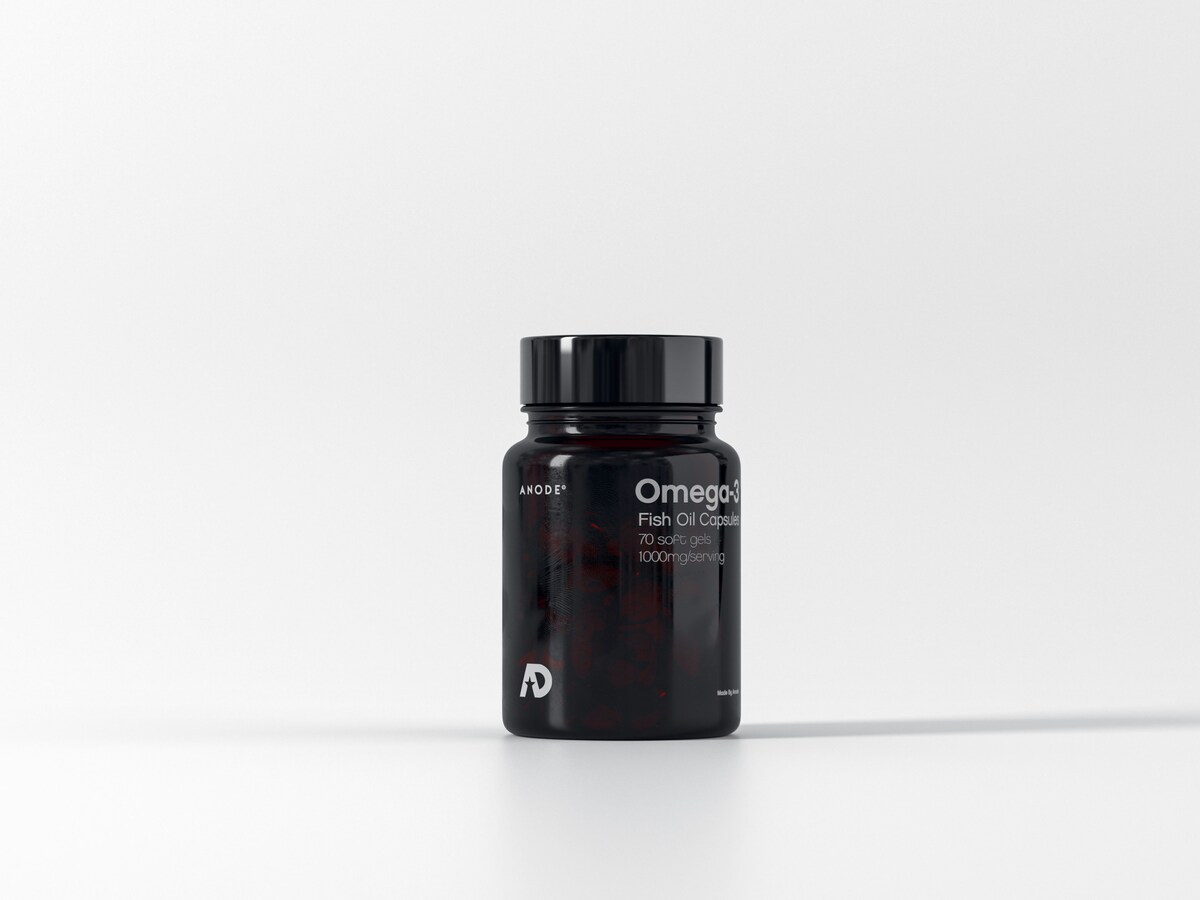
Over the past two decades, researchers have studied the link between omega-3 and depression. The evidence is promising but mixed. Several meta-analyses show that high-EPA omega-3 supplements can meaningfully ease depressive symptoms, while other reviews find the benefit small or inconsistent.
Omega-3 isn’t a proven depression cure, but it may be a low-risk addition worth discussing with a doctor. So how might fish oil help, and how much should you take?
Key Highlights
- Mixed but promising evidence – Omega-3s, especially EPA-rich formulations, have shown potential to ease depressive symptoms in several studies, though research is still inconclusive and more studies are needed.
- Dosage depends on your goals and diet – General health needs are met with 250–500mg of combined EPA and DHA daily, while depression-specific benefits typically require higher doses of 1,000–2,000mg of EPA, especially if you don’t eat fish regularly.
- Safety matters – Fish oil can affect blood sugar, cholesterol, and bleeding risk at high doses, and certain fish should be avoided by children and pregnant women due to mercury.
Table of Contents
What are Omega-3 Fatty Acids?
Omega-3 fatty acids are an essential for many functions of the human body. Studies indicate they have an effect on everything from heart health to inflammation to mental health.
While research concerning omega-3s and mental health is only a decade old, there’s been a lot of promise. More so, omega-3s may help the brain reach proper functioning. ¹
Beyond that, research suggests omega-3s can also help with: ²
- Heart disease
- High cholesterol
- Rheumatoid arthritis
Furthermore, other conditions are also being studied, such as attention-deficit/hyperactivity disorder (ADHD) and some forms of cancer.
Three types of omega-3s can be found within a diet, two of which are found in fish oil:
- Docosahexaenoic acid (DHA)
- Eicosapentaenoic acid (EPA)
While most people receive these omega-3s by eating fish, you also have the option to take a supplement.
Omega-3 and Depression: Is it Beneficial?
Researchers believe that people with depression may not have enough DHA and EPA in their brains. Therefore, taking a fish oil supplement can help return their brains to normal functioning.
In a 2009 review, researchers looked over three studies that incorporated EPA into three types of depression: major depression in adults, major depression in children, bipolar depression. Most of the subjects who took EPA for all types of depression saw significant improvement in symptoms and benefited more than those who received the placebo. ³
A 2004 review found that DHA may also play an important role. It was discovered that those with minor depression, postpartum depression, and suicidal ideation had low levels of DHA and EPA in their system. These studies found that fish oil supplements improved symptoms in most participants. ⁴
Admittedly, more research needs to be done to confirm the use of omega-3s for depression. However, what we do have is very promising.

Omega-3 Dosage Recommendation
If you want more omega-3s in your diet, you can do so through the following:
- Adding more fish to your diet (i.e. salmon, tuna, shellfish)
- Fish oil supplements
- Flaxseed oil
- Algae oil
- Canola oil
The Food and Drug Administration (FDA) recommends two to three servings of fish per week. These sizes include:
- 4 ounces for adults
- 2 ounces for children
If you plan to take a fish oil supplement, the exact dosage varies depending on the severity of your depression. On average, most doctors recommend 1000 to 1200mg of fish oil daily. Most supplements you come across will have this dosage.
To give you a better idea of how much omega-3 to take based on your seafood intake, we invite you to use the following chart:
| Your Seafood Habits | Recommended Approach | Approx. Daily EPA + DHA |
| Little to no fish (less than 1 serving/week) | Consider a supplement in addition to diet | 250 – 500mg minimum (baseline); higher if targeting mood benefits |
| Occasional fish (1 serving/week) | Supplement to fill the gap, or increase intake 2-3 servings/week | 250 – 500mg from food, varies by fish type |
| Regular fish eater (2-3 servings/week, per FDA/AHA guidance) | Likely meeting baseline needs through diet alone | Roughly 250 – 500mg from food; varies by fish type |
| Targeting depression-specific benefit | Diet alone usually isn’t enough, supplementation is typically needed | 1,000 – 2,000mg EPA/day, even with regular fish intake |
Omega-3 Safety and Side Effects
Taking too much fish oil can have negative effects to your health, including:
- Challenges in managing blood sugar levels
- Elevated LDL cholesterol
- Increased risk of bleeding
Furthermore, children and pregnant women are at a higher risk of mercury poisoning. Therefore, they should avoid eating certain types of fish and taking fish oil supplements. The types of fish to avoid include: ⁵
- Albacore tuna
- Mackerel
- Swordfish
- Tilefish
Keep in mind that fish oil supplements may interact with other medications. Therefore, you should consult your healthcare provider before you start taking it.
Final Word
While omega-3 may be beneficial for depression, more research is necessary to confirm its use. Still, since depressed individuals seem to lack DHA and EPA, consuming more fish (or taking a fish oil supplement) seems like a promising alternative for depression.
If you plan to take omega-3 for depression, we recommend you consult your healthcare provider beforehand.
Frequently Asked Questions (FAQs)
How long does it take for omega-3 to help with depression?
Most studies showing benefit used 8–12 weeks of consistent daily supplementation before symptoms improved. Omega-3s aren’t a fast-acting treatment.
Can you take omega-3 with antidepressants?
Yes. Omega-3 supplements don’t interact with antidepressant medications and are commonly used alongside them, but confirm with your prescriber first.
Is fish oil as effective as antidepressants?
No strong evidence supports this claim. While some social media claims suggest otherwise, no rigorous trials show omega-3 matching antidepressants on its own. Research points to a modest add-on effect at best.
Can omega-3 supplements prevent depression?
Not clearly. A large long-term study of over 18,000 adults found daily fish oil didn’t significantly lower the risk of developing depression in people without a history of it.
Is EPA or DHA better for depression?
EPA. Most studies find EPA-dominant formulas more effective for mood, while DHA alone hasn’t shown the same benefit.
What foods besides fish contain omega-3?
Walnuts, flaxseed, chia seeds, and hemp seeds all contain omega-3s, though as ALA rather than the EPA/DHA forms most linked to mood benefits.
References
¹ Dighriri IM, Alsubaie AM, Hakami FM, Hamithi DM, Alshekh MM, Khobrani FA, Dalak FE, Hakami AA, Alsueaadi EH, Alsaawi LS, Alshammari SF, Alqahtani AS, Alawi IA, Aljuaid AA, Tawhari MQ. Effects of Omega-3 Polyunsaturated Fatty Acids on Brain Functions: A Systematic Review. Cureus. 2022 Oct 9;14(10):e30091. doi: 10.7759/cureus.30091. PMID: 36381743; PMCID: PMC9641984.
² Mohebi-Nejad A, Bikdeli B. Omega-3 supplements and cardiovascular diseases. Tanaffos. 2014;13(1):6-14. PMID: 25191488; PMCID: PMC4153275.
³ Osher Y, Belmaker RH. Omega-3 fatty acids in depression: a review of three studies. CNS Neurosci Ther. 2009 Summer;15(2):128-33. doi: 10.1111/j.1755-5949.2008.00061.x. PMID: 19499625; PMCID: PMC6494070.
⁴ Logan AC. Omega-3 fatty acids and major depression: a primer for the mental health professional. Lipids Health Dis. 2004 Nov 9;3:25. doi: 10.1186/1476-511X-3-25. PMID: 15535884; PMCID: PMC533861.
⁵ Stratakis N, Conti DV, Borras E, Sabido E, Roumeliotaki T, Papadopoulou E, Agier L, Basagana X, Bustamante M, Casas M, Farzan SF, Fossati S, Gonzalez JR, Grazuleviciene R, Heude B, Maitre L, McEachan RRC, Theologidis I, Urquiza J, Vafeiadi M, West J, Wright J, McConnell R, Brantsaeter AL, Meltzer HM, Vrijheid M, Chatzi L. Association of Fish Consumption and Mercury Exposure During Pregnancy With Metabolic Health and Inflammatory Biomarkers in Children. JAMA Netw Open. 2020 Mar 2;3(3):e201007. doi: 10.1001/jamanetworkopen.2020.1007. PMID: 32176304; PMCID: PMC7076335.




Leave a Reply